
The Battle to Save Akumal
Words by Lily Dayanim and Sara Lopez
Sea turtles have been coming to Akumal for thousands of years, long before resorts, roads, or even the rise of the ancient Maya.
The name Akumal, meaning “Place of the Turtle” in Yucatec-Maya, reflects its ancient and ongoing role as a vital sanctuary where green, hawksbill, and loggerhead turtles return generation after generation to feed and nest. But in recent decades, this timeless rhythm was disrupted by rapid development and mass tourism.
A Sanctuary Under Threat
Located approximately 27 kilometers north of Tulum, Akumal, like many towns along the Riviera Maya experienced a tourism boom. As a consequence, Akumal Bay began to suffer the consequences. Still lacking formal protected status, the bay began receiving thousands of visitors per day during peak high seasons.
Tourists entered the bay’s waters wearing chemical sunscreens, trampling fragile seagrass beds, crowding marine wildlife, and in some cases, physically interacting with sea turtles by touching or even standing on them. The impact was devastating. What had once been a peaceful refuge was quickly becoming an ecological pressure cooker.
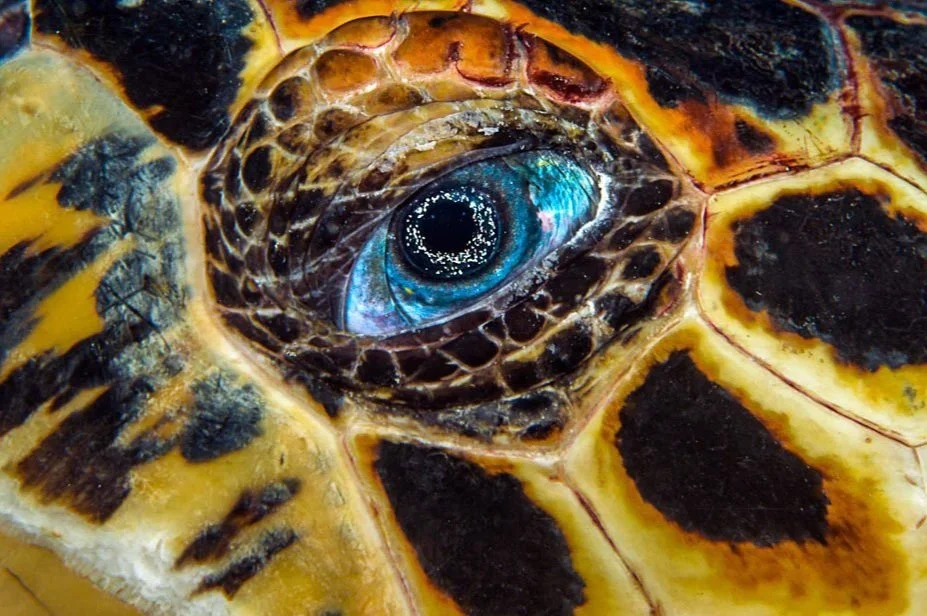
The Yucatán Peninsula—particularly the coastal region of Quintana Roo and Akumal Bay—is a vital nesting ground for Atlantic hawksbill sea turtles.
A Fight For Protection
The warning signs were clear to those who knew the bay best. Since the early 1990s, the Centro Ecológico Akumal (CEA) had been advocating for protection, developing conservation plans, and urging Mexico’s federal government to recognize Akumal’s ecological significance.
Their advocacy gained momentum through the support of local residents, environmental groups, and widespread public petitions. Yet for years, the bay remained without the legal tools necessary to regulate the rapidly growing tourism industry.
Then came a turning point. Local boat captain Cuitlahuác, widely known as “Captain Quickie,” took the fight into the legal arena. He sued the Mexican federal government to demand protections for Akumal’s marine habitat and its endangered turtle population.
Meanwhile, in 2013, scientists from Operation Wallacea, a conservation research and youth education institute, launched a long-term study of the bay in partnership with CEA and the Akumal Dive Centre. Their goal was to document the impact of unchecked tourism on sea turtle health and marine habitats.
The Data that Turned the Tide for Akumal Bay
The findings were alarming.
Turtles in Akumal were exhibiting signs of fibropapillomatosis, a disease linked to contaminated waters and chronic stress. Characterized by the growth of tumors on the skin, eyes, and internal organs, the condition can impair movement and vision, and in severe cases, become fatal.
Researchers traced the source of this health crisis to overcrowded snorkel zones, vanishing seagrass beds, and pollution from sunscreen and untreated waste. Their scientific data formed a compelling case for immediate conservation action.
In 2016, after years of community advocacy, scientific research, and legal pressure, the Mexican government officially designated Akumal as a Marine Refuge for Protected Species.
A Marine Designated Site
This designation triggered a series of much-needed changes. Tourist activity was capped. A “Turtle-Only Zone” was established to allow turtles to feed undisturbed. Infrastructure such as biodigesters and public restrooms was introduced to reduce contamination. Only certified guides were permitted to lead small, regulated snorkel groups.
By 2024, the impact was undeniable: hundreds of green and loggerhead turtle nests were documented, and nearly 50,000 hatchlings were released back into the wild. These numbers reflect a healthier ecosystem, supported by reduced pollution, improved beach management, and the recovery of key habitats like seagrass beds.
A Global Reminder
Even if you’ve never visited Akumal, its story matters. The bay is part of the Mesoamerican Reef—the second-largest reef system in the world—and plays a vital role in supporting global biodiversity. What happens in Akumal has ripple effects far beyond Mexico’s coastline.
This small corner of the Yucatán Peninsula serves as a blueprint for how grassroots organizing, science-based advocacy, and inter-institutional collaboration can restore a fragile ecosystem.
Akumal teaches us that respectful tourism is possible, and that communities, when empowered by knowledge and action, can drive meaningful environmental change.
Protecting places like Akumal is not just a local responsibility—it is a shared duty that touches us all.
