
Ten Documentaries to Watch This Summer
This curated list highlights powerful documentaries that center Indigenous voices and frontline communities in the fight to protect land, water, and ways of life. From the Amazon to the Arctic, these films go beyond headlines, shedding light on stories of resistance, ancestral knowledge, and the devastating impacts of extractivism. Each film offers not only a call to action but a testament to the enduring strength of Indigenous peoples in safeguarding our planet’s most vital ecosystems.
Whether you're an educator, activist, or simply a curious viewer, these films will deepen your understanding of the interconnected struggles for Indigenous rights and environmental survival. In no particular order here they are as follows:
THE TERRITORY (2022)
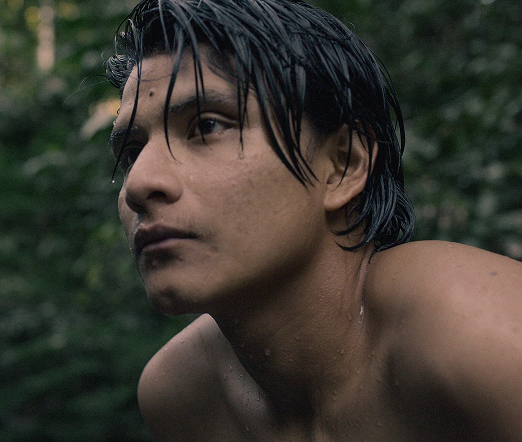
A still from The Territory directed by Alex Pritz
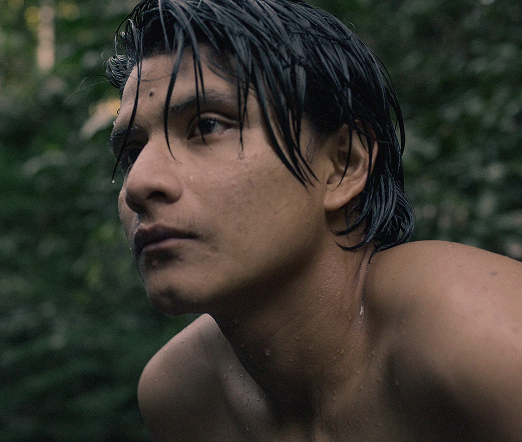
This film explores the struggles of the indigenous Uru-eu-wau-wau peoples of the Brazilian Amazon against deforestation caused by the encroachment of logging and export agriculture. It is a film that is partially shot by the Uru-eu-wau-wau people and grants viewers an inside look into the challenges of environmental degradation facing indigenous communities in the Amazon.
A MÃE DE TODAS AS LUTAS (2020)
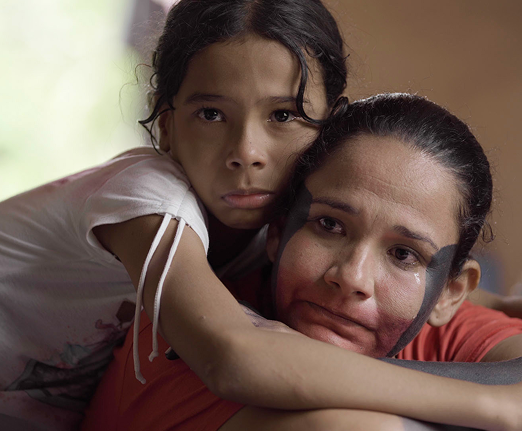
Directed by Susana Lira
This film portrays the lives of two women, Shirley Krenak and Maria Zelzuita, engaged in a struggle over land rights in Brazil. Shirley, from the Krenak community in Minas Gerais, and Maria, a survivor of the Eldorado dos Carajás Massacre in Pará, demonstrate the intimate connections between feminism, land protection, and cultural identity.
ARICA (2020)
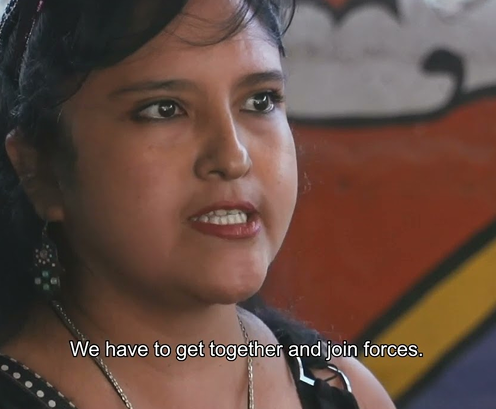
Directed by Lars Edman, William Johansson Kalén
In the mid-1980s, A Swedish mining company called Boliden dumped 20,000 tonnes of waste in the northernmost Chilean city of Arica. As a result, around 18,000 people were affected by cancer, congenital malformations and neurological diseases. This film documents the struggle of the people of Arica for justice and accountability in response to this catastrophe.
WATER FOR LIFE (2023)
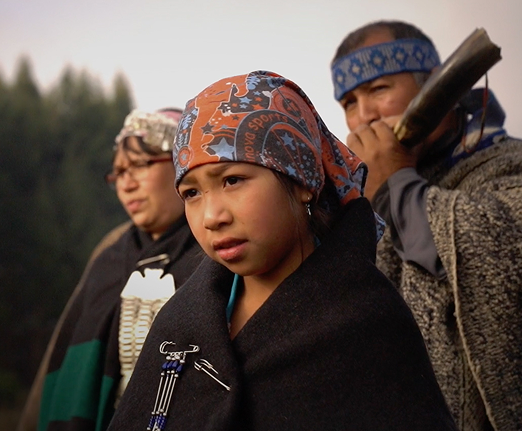
Directed by Will Parinello
Following the stories of three people from different indigenous communities across Latin America, this film explores how the struggle for water rights is central to a variety of indigenous communities across Latin America. The subjects of the film are “Berta Cáceres, a leader of the Lenca people in Honduras; Francisco Pineda, a subsistence farmer in El Salvador; and Alberto Curamil, an Indigenous Mapuche leader in Chile”
HIJA DE LA LAGUNA (2015)
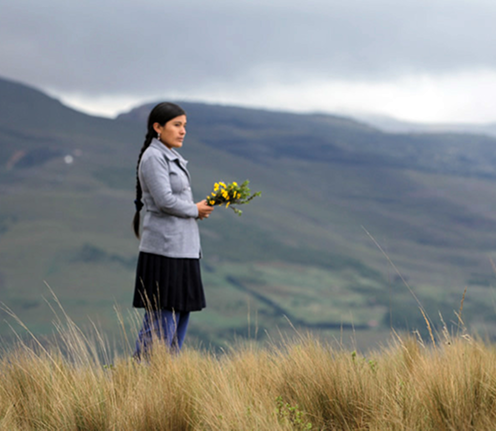
Directed by Ernesto Cabellos
Amid the Peruvian gold rush, an Andean woman uses her spiritual connections to the water to prevent a mining corporation from destroying a sacred lake. This film depicts the Andean struggle against extractivism in a way that highlights the deep connection between water and life itself.
THE CONDOR AND THE EAGLE (2019)
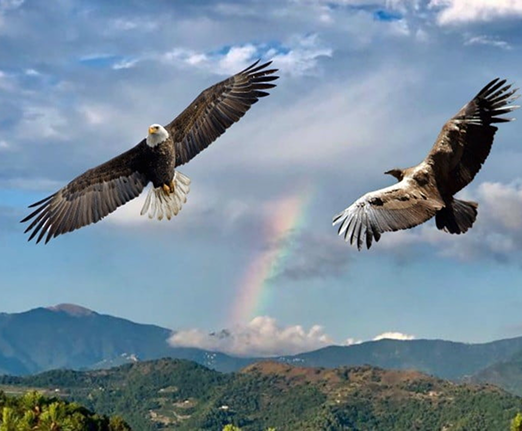
Directed by Clement Guerra and Sophie Guerra
This film depicts a journey undertaken by four Indigenous leaders from the Canadian Boreal forests to the center of the Amazon rainforest. The purpose of their adventure demonstrates deep solidarity between the indigenous peoples of North and South America: deepening the meaning of “Climate Justice”.
LISTENING TO THE EARTH: INDIGENOUS WISDOM AND CLIMATE FUTURES
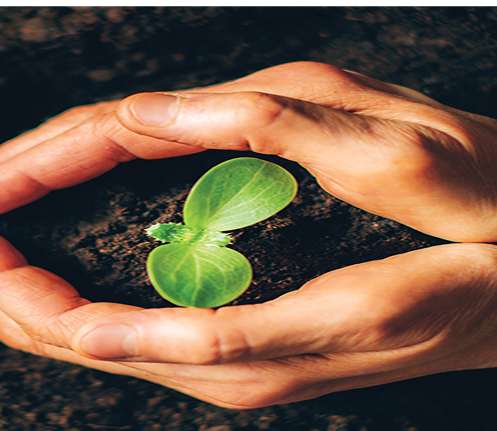
Directed by Joe Berlinger
This PBS production displays a panel of Native environmental justice activists, including Eriel Deranger and Kyle Whyte, on the climate knowledge that has been passed down through indigenous communities for generations. Hosted by NPR Science Friday's Diana Montano, this film explores possible avenues for modes of environmentalism that may better protect the planet.
SONS QUE CURAM (2024)
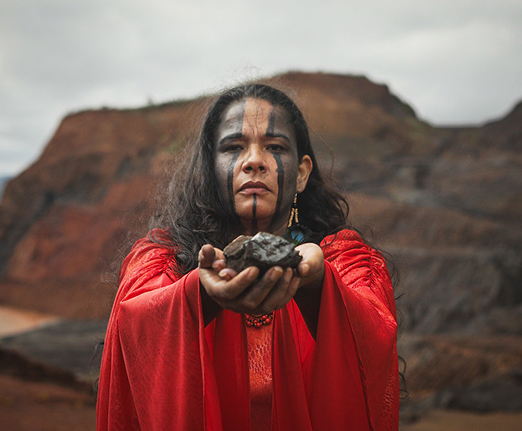
Directed by Shirley Krenak
Sons Que Curam takes viewers on a spiritual journey guided by Shirley Krenak. It explores the fallout of the 2015 Doce River environmental catastrophe in Minas Gerais. It depicts the emotional and spiritual effects of the river’s poisoning on Krenak culture and local ecosystems.
LOS ULTIMOS GUARDIANES (2017)

Directed by Joe Tucker and Adam Punrano
The Last Guardians, an award-winning documentary made with the indigenous Sàpara and Kichwa communities of the Ecuadorian Amazon, shares a story of indigenous environmental knowledge and how it can change the way we approach life itself. In the midst of global ecological breakdown, lessons from indigenous knowledge and wisdom are more important than ever for the struggle to heal the planet.
TIME IS WATER (2025)
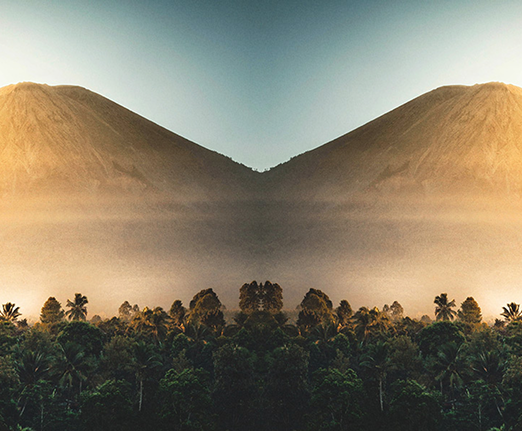
Directed by Francesca Badia Dalmases, Juan Manuel Crespo, Pablo Albarenga
This documentary film focuses on the work of The Sacred Headwaters Alliance: an organization of 30 indigenous peoples of the upper Amazon in Ecuador and Peru. This story explores how cross boundary solidarity between indigenous communities is utilized in defense of a forest under grave threats from extractive industries.
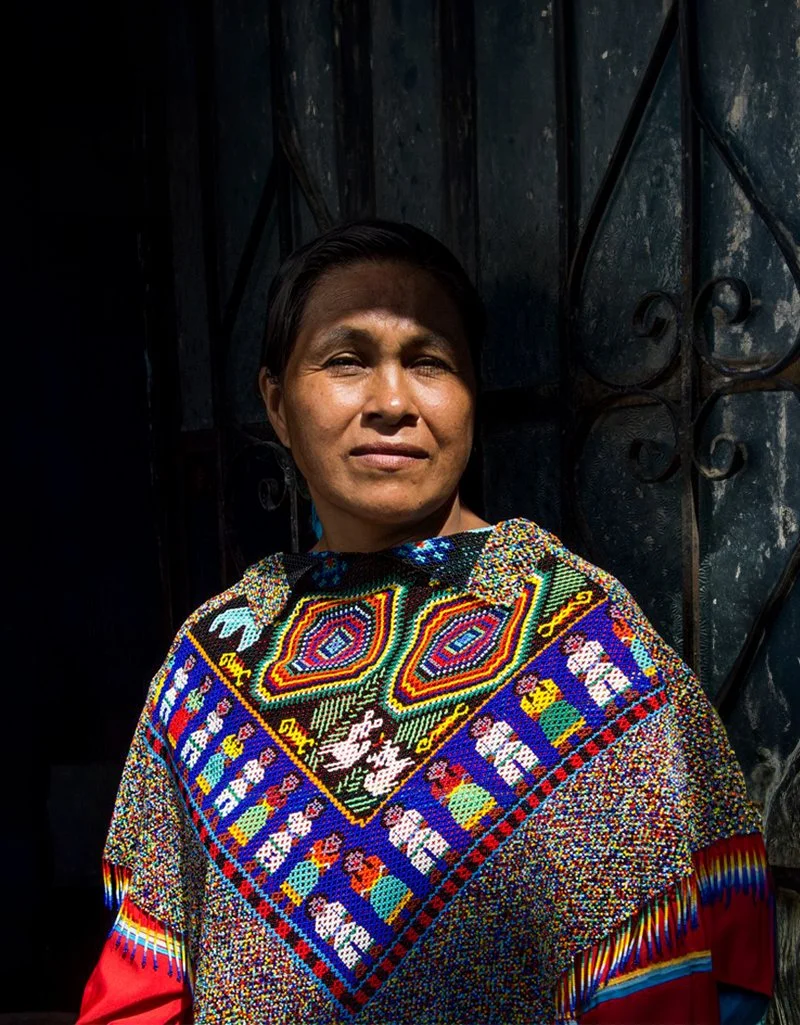
A Victory for the Wixárika
WORDS BY CHARLIE WOHLGEMUTH
Mexico announces a landmark step: The return of nearly 15,000 acres of ancestral land to the Indigenous Wixarika people. This long-fought victory follows decades of legal battles and grassroots organizing by the Wixarika (also known as Huichol) community, who have been demanding the restitution of their sacred territory in the San Sebastián Teponahuaxtlán region of Jalisco. The returned land, which had been unlawfully occupied by private ranchers, holds deep cultural and spiritual significance—forming part of the Wixarika’s pilgrimage route and cosmology. The decision marks a rare but powerful example of Indigenous land rights being honored in Latin America, setting a precedent for other restitution claims across the continent. Still, the work is far from over, as local resistance and legal loopholes continue to challenge the Wixarika’s ability to fully access and care for their territory.
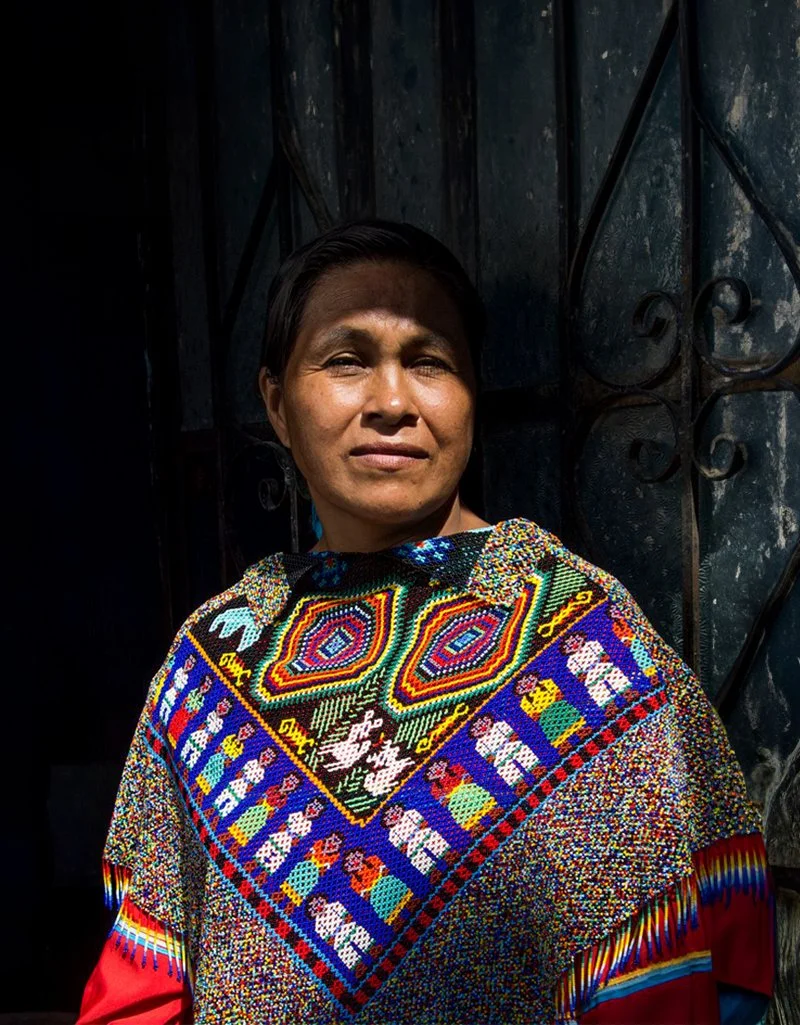
SHEINBAUM DELIVERS LONG-AWAITED LAND JUSTICE
On May 8th 2025, Claudia Sheinbaum, Mexico’s first woman president, announced the return of 5,956 hectares (14,747 acres) of ancestral territory to the indigenous communities of Wixárika. This unprecedented move marked an important step towards mending the historic injustices visited upon Mexico’s indigenous populations since the Spanish colonial invasion over five hundred years ago. The Mexican state had ignored the demands of the Wixárica for their land back since the agrarian conflict began in the late 19th to early 20th century, and this had continued despite 11 court rulings in the last decade confirming the illegality of the land grabs. However, Claudia Sheinbaum has sought to right the wrongs of the past with her Plan de Justicia para el Pueblo Wixárika, of which the recent ceremony where she announced the return of the land marks a major development.
Land reform has been central to Mexican political struggles for centuries. Despite the victory of the 1911 Mexican Revolution, which enacted vast land reform by breaking up and redistributing many of the colonial haciendas, the encroachment of the state and private agriculture onto indigenous lands continued. The Esperanza Project writes, “although the 1917 Mexican Constitution recognized Indigenous communal land rights, in practice these rights were frequently ignored.” As a result, the Wixárika suffered seizures of their ancestral territory from the Mexican state during the Porfirian land reforms of the pre-revolutionary period of the late 19th century. These lands were later privatized and sold off to ranchers that have held onto the land ever since, despite the efforts of the Wixárika to regain their land rights in court.
A CENTURY OF COURT BATTLES AND SILENCE
It is often true that legal verdicts cannot always enforce the meaningful change that they intend to. The courts are typically slow mechanisms, and when it does come down to enforcement, power disparities can make the achievement of actually existing justice quite difficult. In the case of the Wixáka, the recognition of indigenous land rights in Mexico’s revolutionary 1917 constitution was not itself enough to reverse the land grabs of the previous period. This gap between what is written in the law and the reality on the ground is a situation that dispossessed indigenous communities in Latin America continue to face in a variety of contexts. For this reason President Sheinbaum’s initiative to use executive political power to push through the rightful resolution to this centuries old land conflict is a commendable victory, but at the same time it would never have occurred without the relentless struggles of the indigenous communities of Wixárika on the ground and in the courts.
ONE VICTORY, ONGOING STRUGGLES
There is no single panacea to remedy the historic injustices against Latin America’s indigenous communities. This historic victory for the rights of the Wixárika demonstrates that dignity is possible to achieve, but that to realize it requires a multifaceted struggle. The courts or the state alone are inadequate. The Esperanza Project reported that in 2016, “members of the community took direct action by reclaiming one of the parcels that had been awarded to them by the courts. Despite facing threats from non-Indigenous ranchers who still occupied the land, they moved forward.” While Sheinbaum deserves praise for her recent announcement, the direct actions of the dispossessed Wixárika should be recognized as a key factor in this exciting new development for indigenous rights in Mexico. Altering the power structures of the past is no easy task, but for many indigenous communities it is still the task of yesterday, today and tomorrow.
Sources:
“Sheinbaum Returns Stolen Land to Wixárika in Historic Ceremony” The Esperanza Project, May 9, 2025.
10 Museums Honoring Indigenous Knowledge in the Americas
WORDS BY SARA LOPEZ
This list features museums selected not only for their collections but for how they center Indigenous voices, challenge colonial narratives, and honor cultural continuity. In our rapidly changing world, these are physical spaces where memory lives, knowledge is preserved, and Indigenous perspectives lead the way. If you're traveling through the Americas and find yourself in any of the following cities, these museums are well worth a visit.
MUSA: MUSEU DA AMAZONIA
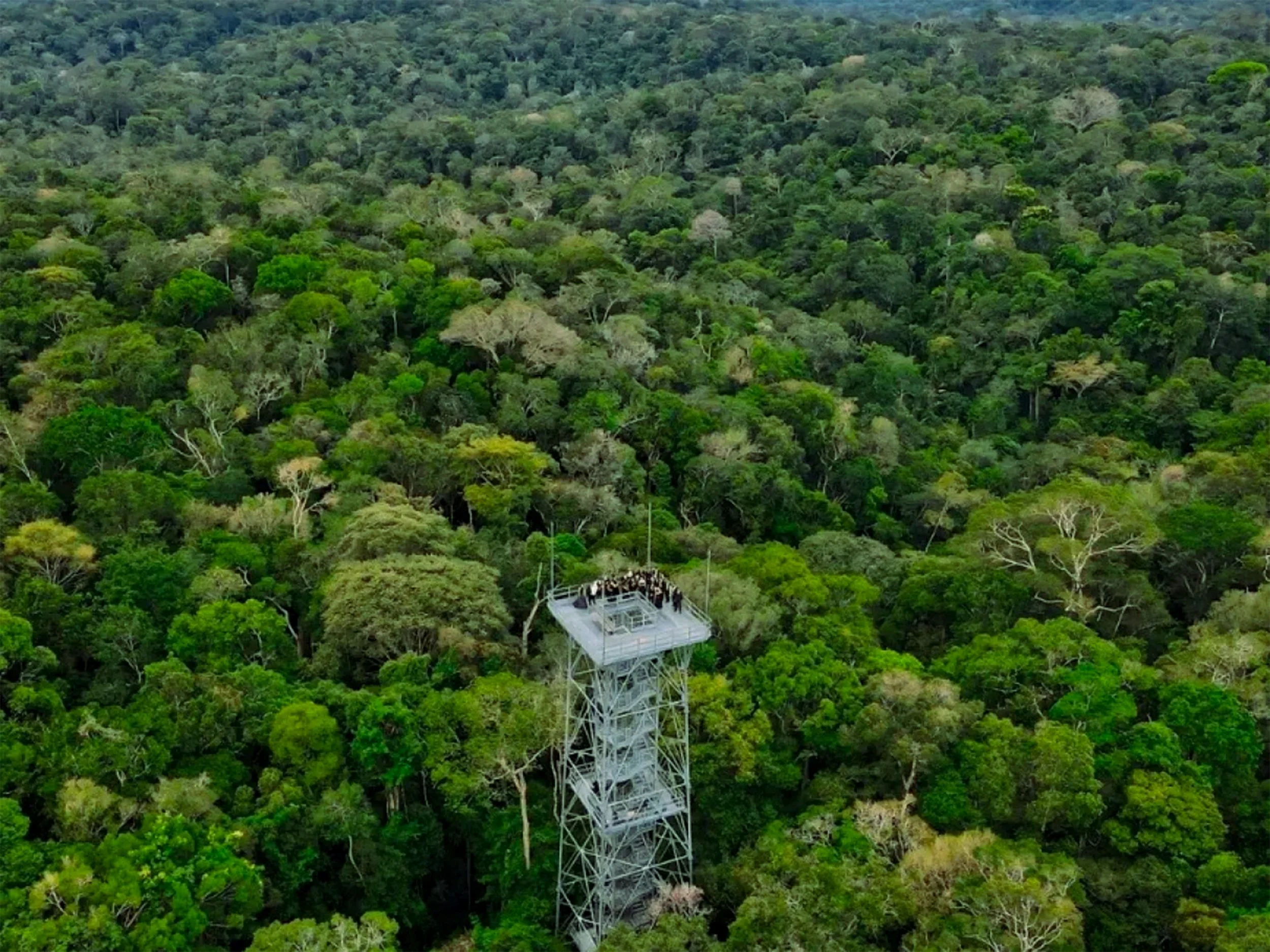
Tourists gathered on a 42 meter tall tower at MUSA, Manaus, Brazil.
The Museu da Amazônia (Musa) reminds us that a museum is not just limited to walls of artifacts but to a forest alive with stories, species, and ecosystems. Founded in 2009 inside the Adolpho Ducke Forest Reserve in Manaus, it is an open-air museum where the Amazon itself is the exhibit. With forest trails, botanical gardens, research labs, and a 42-meter observation tower, MUSA immerses visitors in the living, breathing ecosystem of the world’s largest rainforest—bridging science, Indigenous knowledge, and ecological wonder.
Address: Av. Margarita, 6305 (formerly Avenida Uirapuru), Cidade de Deus (Jorge Teixeira), Manaus, AM, Brazil, CEP 69088‑265
Hours: Open daily except Wednesday, 8:30 AM – 5 PM (last entry at 4 PM) Museu da Amazônia+1WhichMuseum+1
Admission: R$ 40; discounted or free entry for local residents, seniors, students, teachers, children under 5, persons with disabilities, and certain groups
MUSEO NACIONAL DE ANTROPOLOGÍA
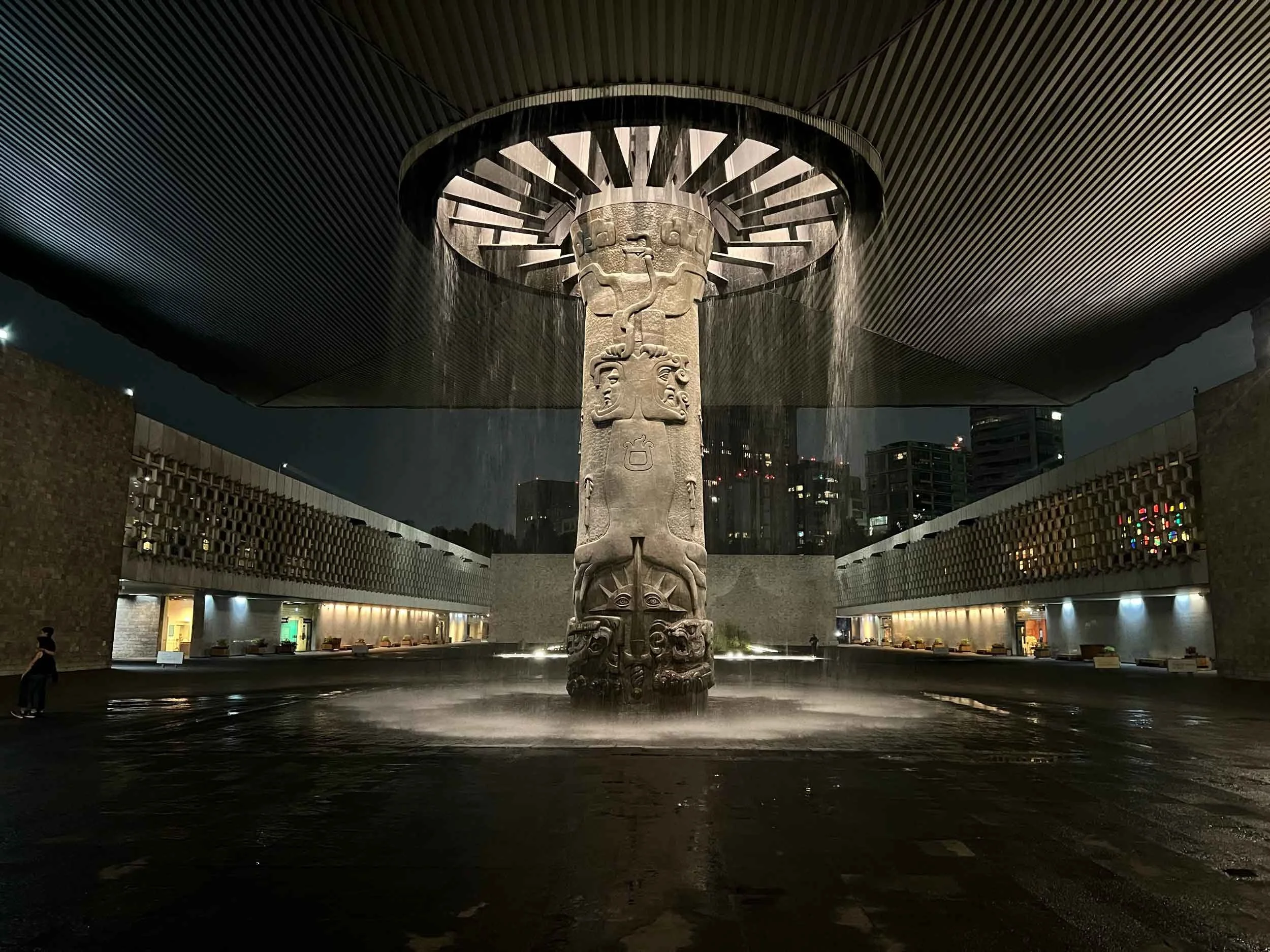
Limpieza del Paraguas monumental
Museo Nacional de Antropología is a monumental tribute to Mexico’s indigenous civilizations. From architecture to curation it honors the depth, diversity, and brilliance of the cultures that continue to shape Mexican identity today. This museum additionally serves as a leading museum of Indigenous and archaeological heritage in Latin America feauturing over 600,000 artifacts from civilizations like the Olmec, Maya, and Aztec. It houses 23 halls dedicated to Mexico’s diverse Indigenous cultures.
Address: Museo Nacional de Antropología, Av. Paseo de la Reforma & Calzada Gandhi S/N, Chapultepec, CDMX, Mexico
Hours: Tuesday–Sunday, 9:00 AM – 8:00 PM (Closed Mondays)
Admission: MX $100 (approx. US $6)
MUSEO DEL ORO
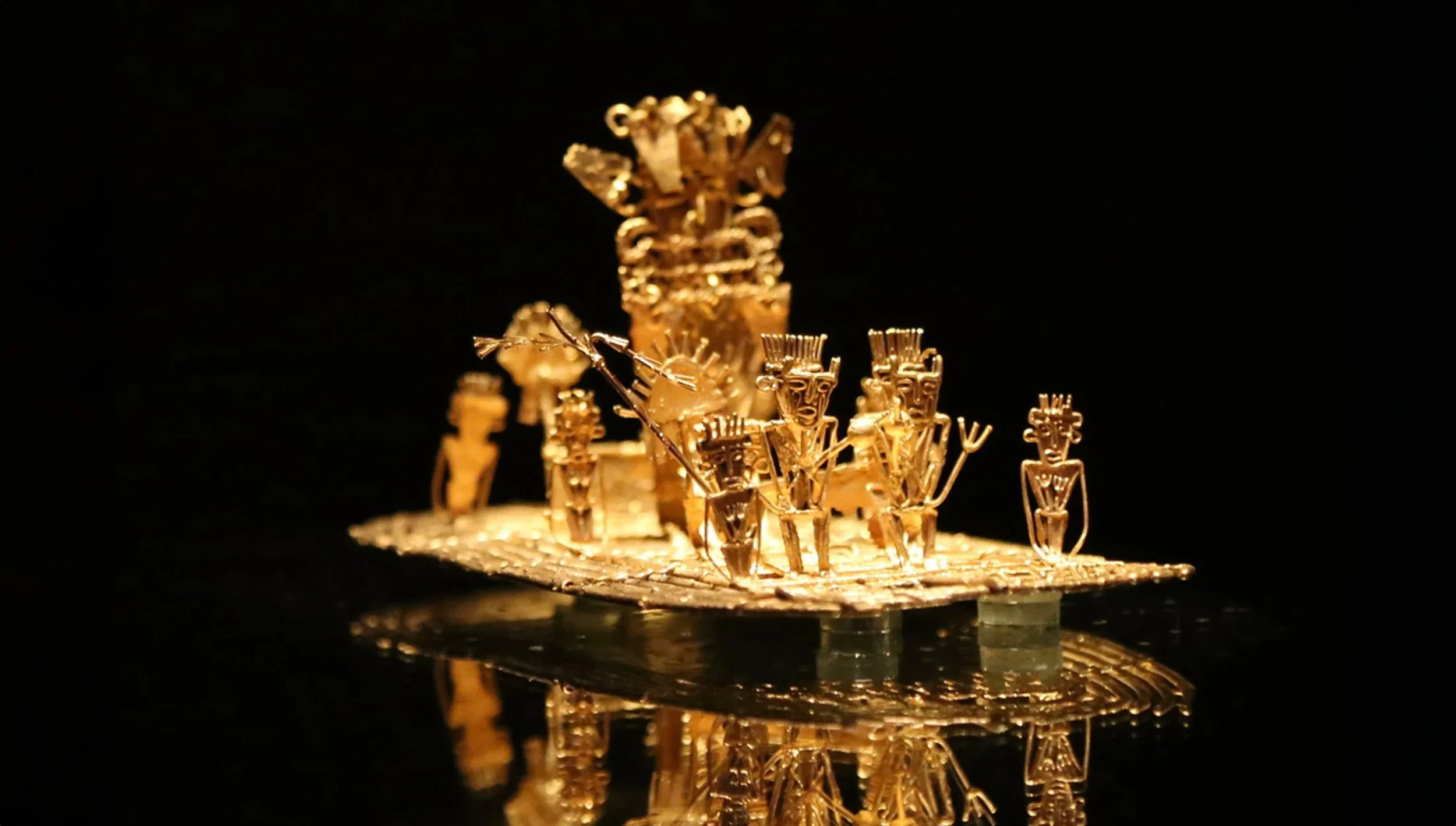
“The Golden Raft” a ceremonial scene believed to represent the initiation ritual of a new Muisca chief.
What if gold was never meant to be currency but a connection to the divine? Museo del Oro redefines gold not as a colonial plunder but as a sacred substance—offering a powerful counter-narrative to centuries of exploitation by centering Indigenous craftsmanship, mythology, and worldview. This museum holds the world’s largest collection of pre-Hispanic gold artifacts—over 34,000 pieces—crafted by Indigenous cultures such as the Muisca, Quimbaya, and Tairona.
Address: Carrera 6 # 15‑82 (Parque Santander), La Candelaria, Bogotá, Colombia
Hours: Open Tuesday to Saturday from 9 AM to 7 PM, Sundays and holidays from 10 AM to 5 PM; closed Mondays.
Admission: COP 5,000; free on Sundays and always free for children under 12, seniors, students, and select groups.
RAFAEL LARCO HERRERA MUSEUM
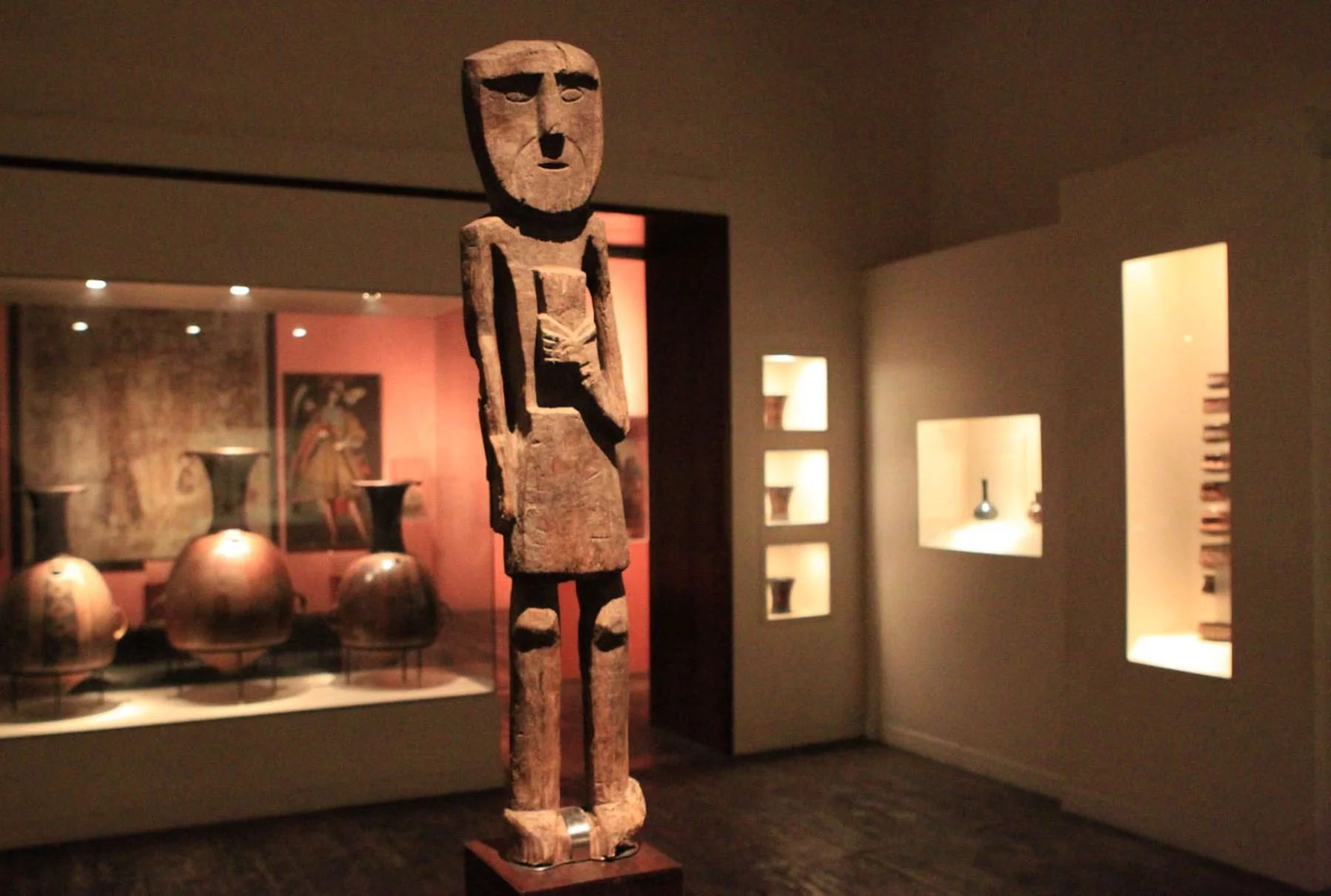
The Larco Museum holds the largest collection of pre-Columbian pieces in the Americas.
Set inside an 18th-century vice-regal mansion built atop a pre-Columbian pyramid, the Rafael Larco Herrera Museum holds one of the most extensive collections of ancient Peruvian art—spanning 5,000 years of history. Its open-storage galleries, richly preserved ceramics, and world-famous erotic pottery offer a uniquely intimate look into the lives, beliefs, and rituals of Peru’s ancestral civilizations.
Address: In Front of, Parque Larco, Av. Simón Bolivar 1515 Ingreso por, Navarra 169, Pueblo Libre 15084, Peru
Hours: Monday through Sunday from 9:00 AM to 7:00 PM, with reduced hours (9:00 AM–6:00 PM) on December 24, 25, 31, and January 1.
Admission: S/ 35 general, S/ 17 for students and seniors (with ID); free for children under 8.
MUSEO DE ARTE PRECOLOMBIANO E INDIGENA (MAPI)
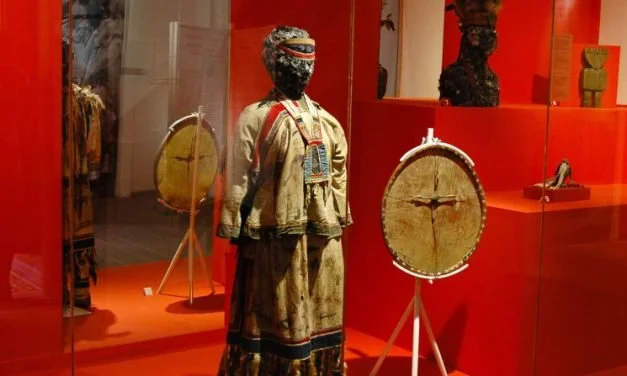
Bridging past and present, the Museo de Arte Precolombino e Indígena (MAPI) honors the region’s pre-Columbian heritage while amplifying the voices of contemporary Indigenous artists and perspectives. MAPI stands out for its commitment to education, cultural continuity, and inclusive storytelling in the Southern Cone.
Address: 25 de Mayo 279, 11000 Montevideo, Departamento de Montevideo, Uruguay
Hours: Monday through Saturday 10:30AM to 6 PM, Closed on Sundays
Admission: 200 Uruguayan Pesos, with student discounts available and free entry for children (under 12), retirees, and select cardholders on Monday AM.
POPOL VUH MUSEUM
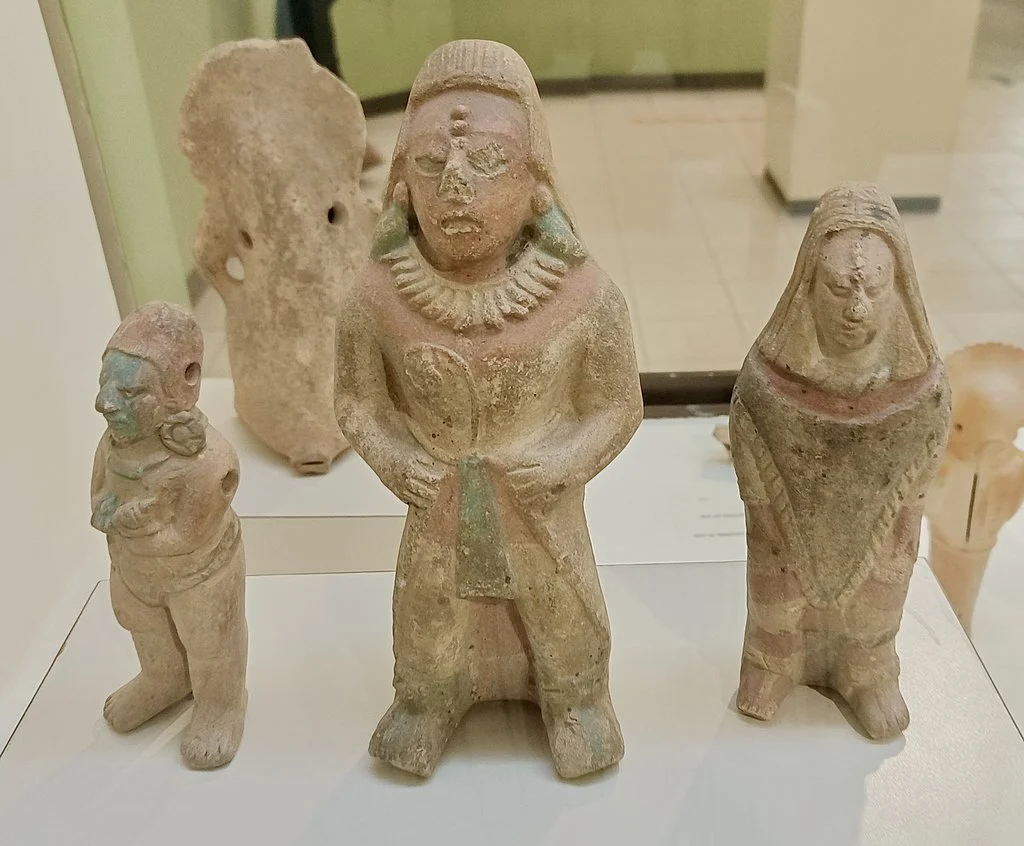
Named after one of the most important and sacred texts of the K’iche’ Maya people of Guatemala, the Museo Popol Vuh, located at Universidad Francisco Marroquín in Guatemala City, is home to one of the most significant collections of Maya art in the world. It offers visitors an in-depth look at the spiritual, artistic, and everyday lives of ancient Maya civilizations through finely preserved ceramics, sculptures, and funerary masks—while also fostering academic research and cultural education.
Address: Interior Universidad Francisco Marroquín, Diag. 6 Final, Ciudad de Guatemala 01010, Guatemala
Hours: Monday through Friday 9AM to 5PM, Saturday 9AM to 1PM, Sundays are closed
Admission: 45 Quetzales for adults, 15 Quetzales for students, and 10 Quetzales for children
CASA DEL ALABADO
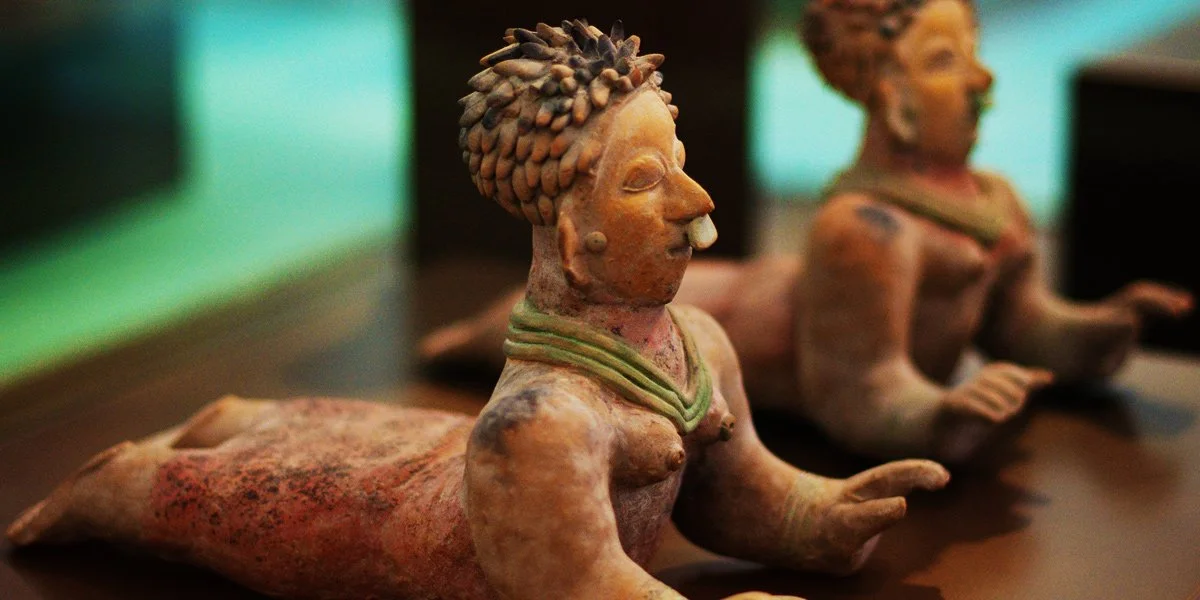
Figurines from one of the oldest known settled communities in the Americas, the Valdivia of coastal Ecuador.
Casa del Alabado is designed to decolonize the museum experience, centering Indigenous cosmology over Western timelines. Housed in a beautifully restored 17th-century home in Quito’s historic center, it features over 5,000 pre-Columbian pieces—about 500 of which are on display at any given time. Rather than organizing artifacts by empire or chronology, the museum invites visitors to connect with ancestral themes like the cosmos, ritual, nature, and memory. It transforms archaeological objects into vessels of myth and meaning.
Address: Cuenca N1-41, Quito 170401, Ecuador
Hours: Wednesday through Sunday 9:00 AM to 5:00 PM, Monday and Tuesday open for private appointments only.
Admission: Adults (general rate) 10 USD, Students (with valid ID) 5 USD, Children under 8 are admitted for free.
National Museum of the American Indian
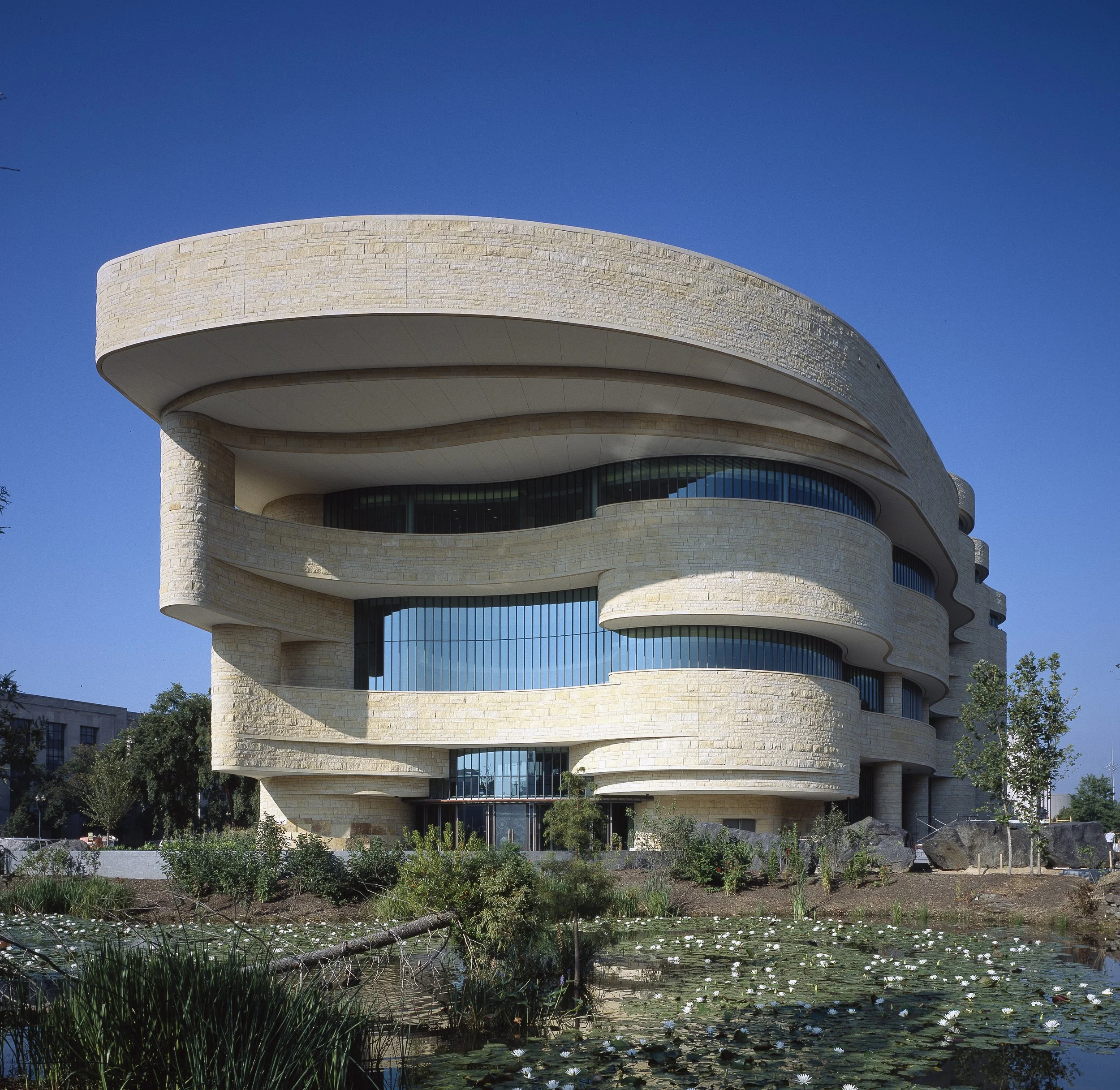
The National Museum of the American Indian in Washington, D.C., part of the Smithsonian Institution, holds one of the world’s most extensive collections of Indigenous artifacts, photographs, and media from across the Americas—spanning the Arctic to Tierra del Fuego—and presents all exhibitions from Native perspectives in collaboration with tribal communities
Address: Fourth Street and Independence Ave SW, Washington, DC 20560
Hours: Daily from 10:00 AM until 5:30PM, closed for Christmas Day, December 25th.
Admission: FREE
MUSEUM OF ANTHROPOLOGY AT UBC
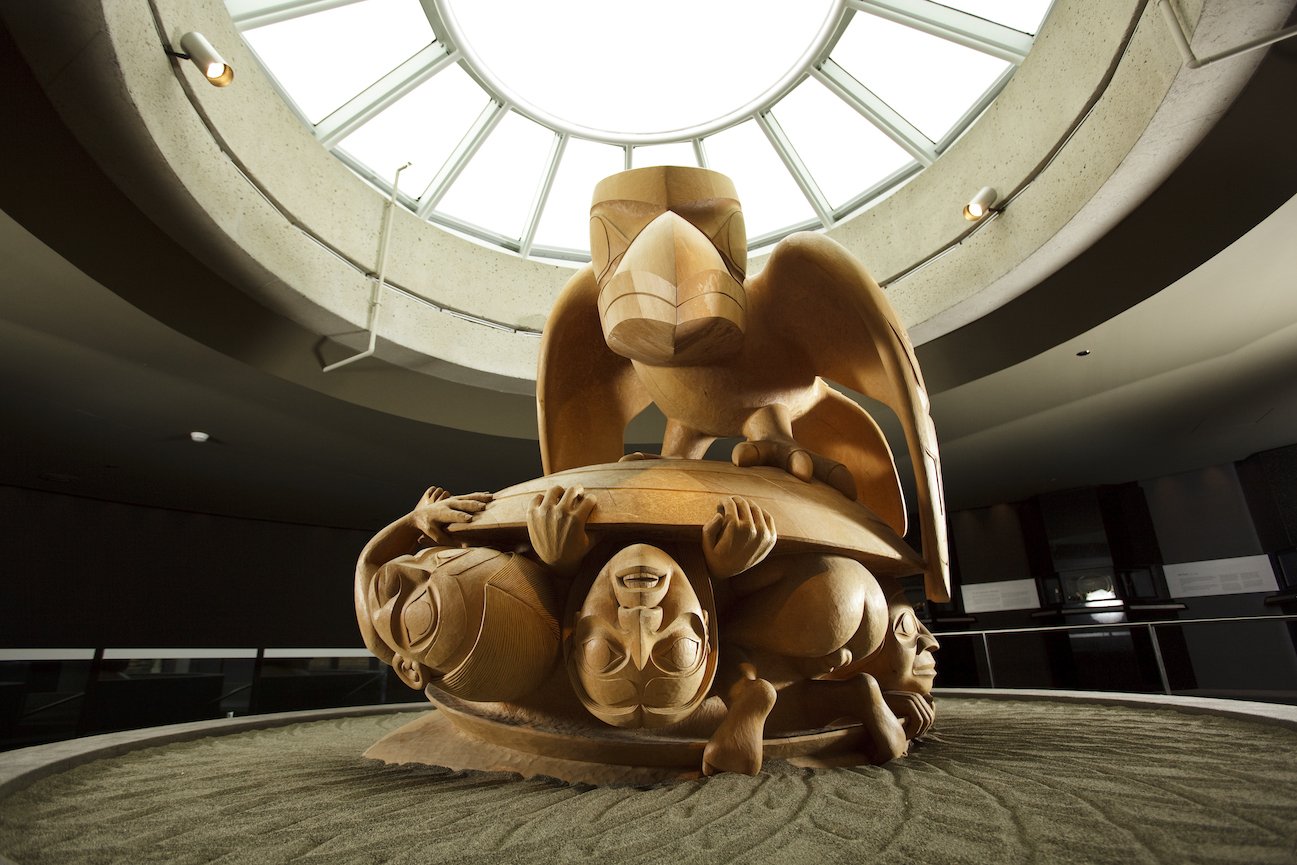
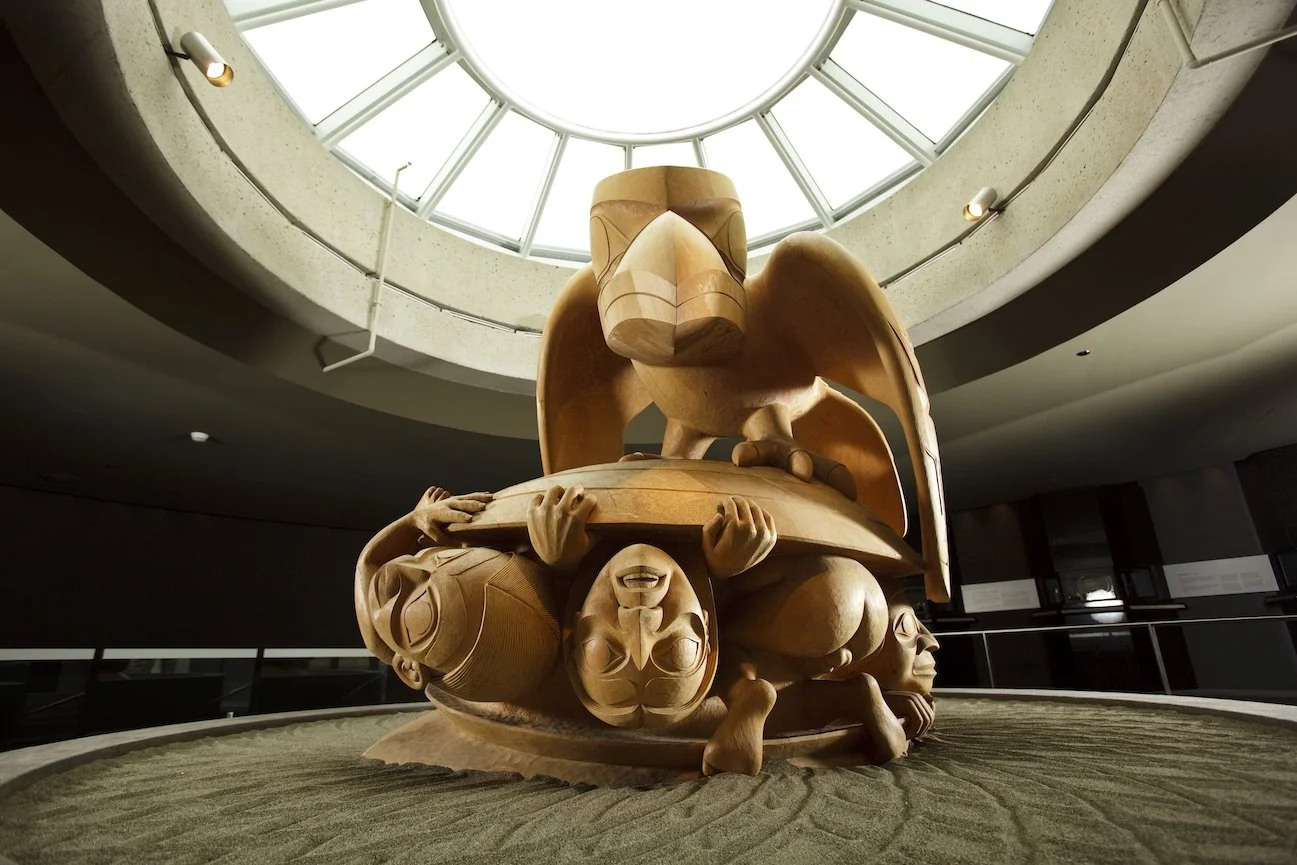
The Museum of Anthropology at UBC (MOA) in Vancouver, Canada, is a renowned research and teaching museum showcasing nearly 50,000 ethnographic and over 535,000 archaeological objects, with a special emphasis on First Nations art of the Pacific Northwest, including monumental totem poles and Bill Reid’s iconic cedar sculpture The Raven and the First Men (shown here).
Address: 6393 NW Marine Drive, Vancouver, BC V6T 1Z2, Canada
Hours: Everyday from 10:00AM to 5:00PM with the exception of Thursdays where they remain open until 9:00PM
Admission: $18 for Adults and free admission for children 6 and under
MUSEU PARAENSE EMILIO GOELDI
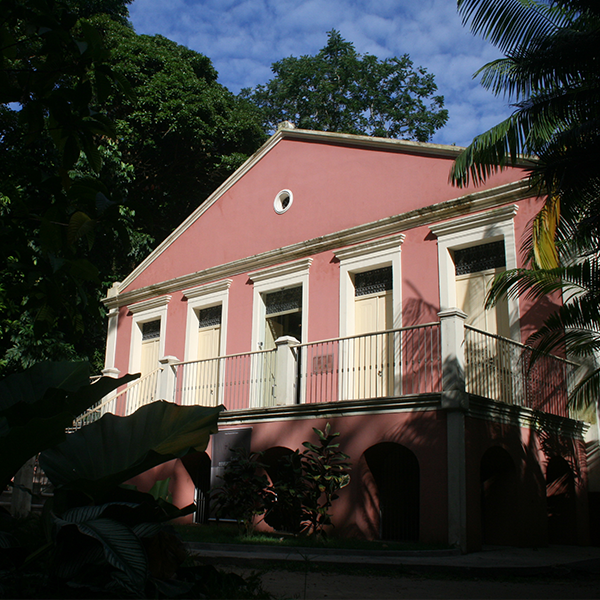
Founded in 1866, the Museu Paraense Emilio Goeldi is Brazil’s oldest research center dedicated to the Amazon’s natural and cultural heritage with a strong emphasis on the indigenous peoples of the region. The museum offers and open air botanical and zoological park that blends ecological and cultural storytelling.
Address: Av. Gov Magalhães Barata, 376 - São Braz, Belém - PA, 66040-170, Brazil
Hours: Wednesday through Sunday 9AM to 1PM, Closed on Mondays and Tuesdays
Admission: R$ 3.00, free entry for children under 12 and seniors 60+
How a Man Made Reef is Helping Revive the Gulf of Mexico
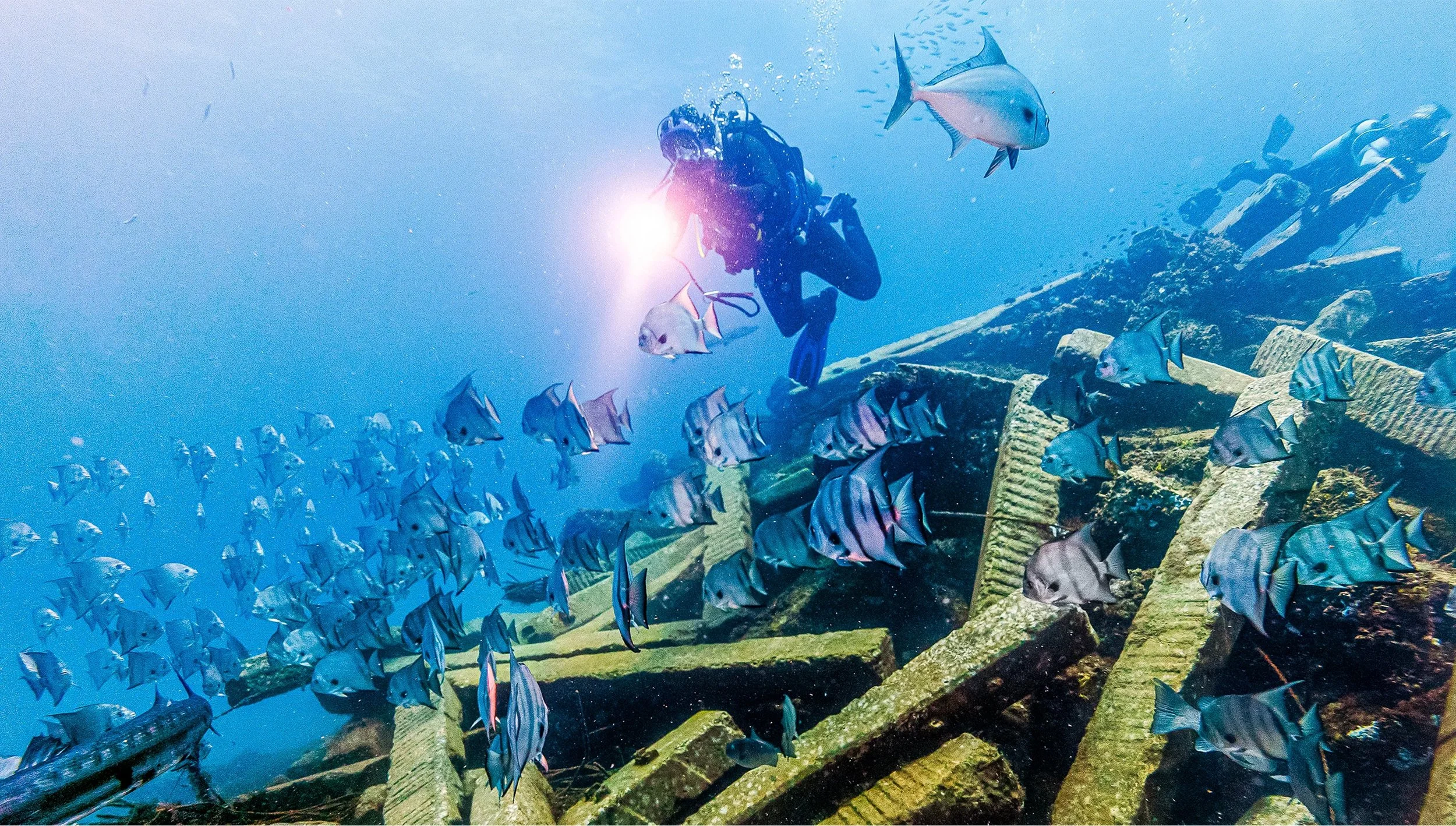
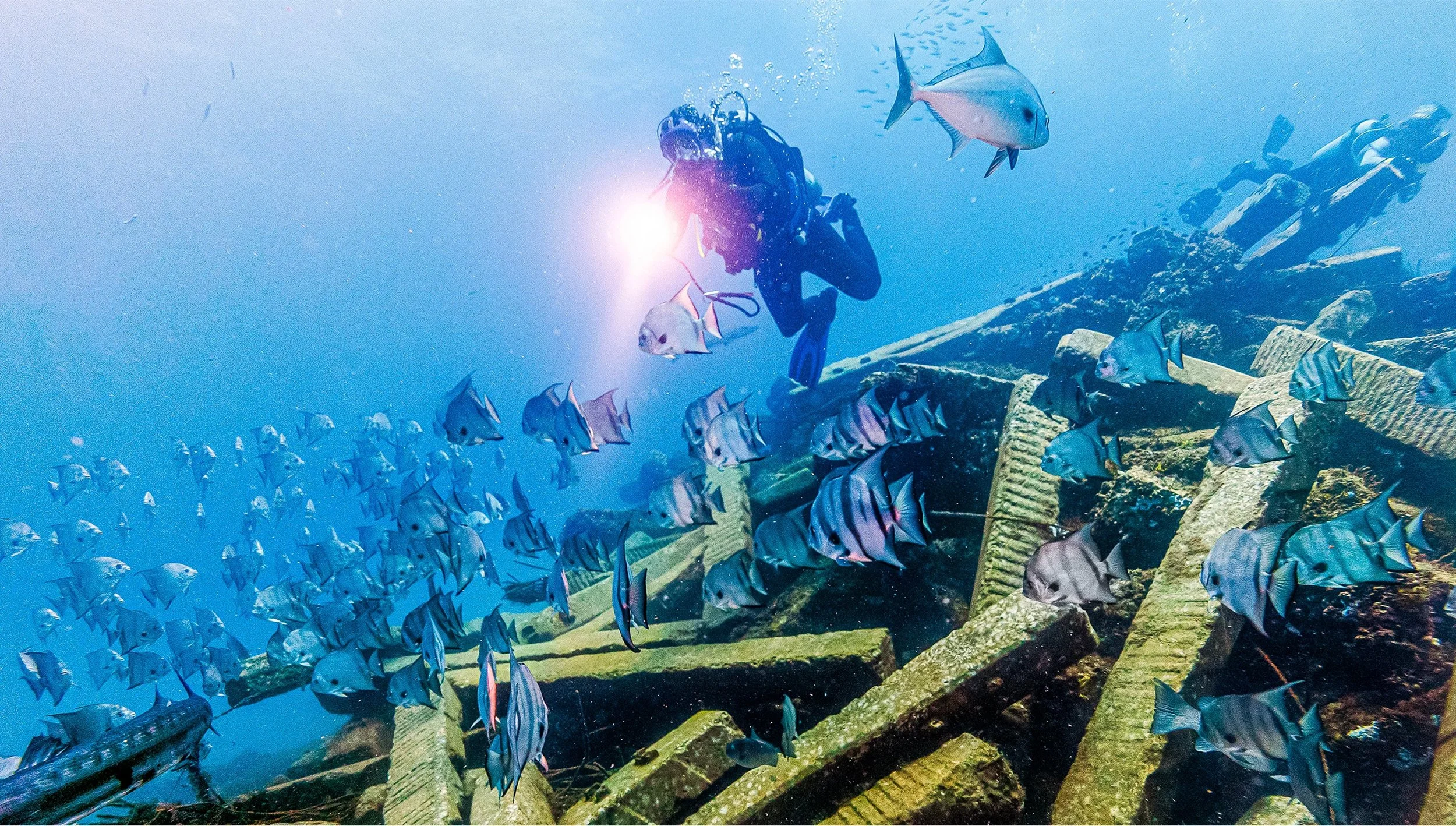
Diver exploring the RGV Reef off of the South Texas coast.
PHOTOGRAPHY COURTESY OF UTRGV
After decades of pollution, collapsing fish populations, and habitat loss pushed marine ecosystems to the brink in the Gulf of Mexico, The RGV Reef in South Texas has been transforming a once-barren stretch of ocean into a thriving habitat for over 30 species, absorbing carbon in the process and showing the world what purposeful restoration looks like.
Industrial Damage Threatens Marine Life
The Gulf of Mexico is home to over 4,500 offshore oil and gas platforms, the largest concentration on earth. But decades of drilling, ocean dredging, and shrimp trawling have been involved with the destruction of critical marine nurseries like seagrass beds and oyster reefs. These areas are essential for the early life stages of marine species, and their loss has had long-term impacts on the health and sustainability of the Gulf’s ecosystem’s.
Toxic oil and gas spills have also been a consequence of such a high precense of oil and gas refineries and the Gulf has suffered some of the most devestating oil and gas spills on our planet because of this. One notable disaster occurred on April 20, 2010, known as the BP oil spill or Deepwater Horizon oil spill. An estimated 210 million gallons of crude oil was released into the Gulf of Mexico with oil spewing into the Gulf for 87 days straight before it was capped. Aquatic species that have suffered some of the most lasting longterm impact include the golden tilefish, yellowfin and skipjack tuna, red drum, and king snake eel all showed signs of exposure.
A Toxic Relationship with Oil and Gas
A 2020 study found a 141% spike in oil-related toxins (measured from 2013-2017) in Red Snapper, one of the Gulf’s most commercially sought after fish. Golden tilefish showed alarming signs of oil related toxins with a 178% increase in exposure measured from 2012 to 2017. Other alarming percentages recorded in aquatic life have raised concerns for the long-term impacts of industrial pollution on marine life and public health.
Despite being one of the most comprehensive and credible assessments of Gulf contamination to date, the study has prompted little meaningful action. Regulatory oversight remains weak, and in recent years, efforts to protect offshore environments have only been further eroded. The Trump administration’s aggressive “drill, baby, drill” agenda rolled back critical safety and environmental measures put in place after the BP oil spill. These policy reversals, along with reduced inspections and a renewed push for fossil fuel expansion, have undercut progress and made accountability even more difficult to enforce.
Finding a Solution: A Man Made Reef
While regulatory action stalls, local restoration efforts are quietly laying the groundwork for recovery. Projects like the RGV Reef, led by scientists and conservationists in South Texas, are working to rebuild what was lost.
In 2017, South Texas made history with the deployment of the RGV Reef, the first large-scale, man-made nursery reef in the Gulf of Mexico. Located off the Texas–Mexico borderland coast, this ambitious grassroots project was constructed using a mix of concrete culverts, reef modules, railroad ties, retired barges, and blocks. The RGV Reef was strategically designed to mimic the complexity of natural coral reef structures. But what does a man-made reef have to do with combating the contamination and destruction of a body of water? Quite a lot, actually.
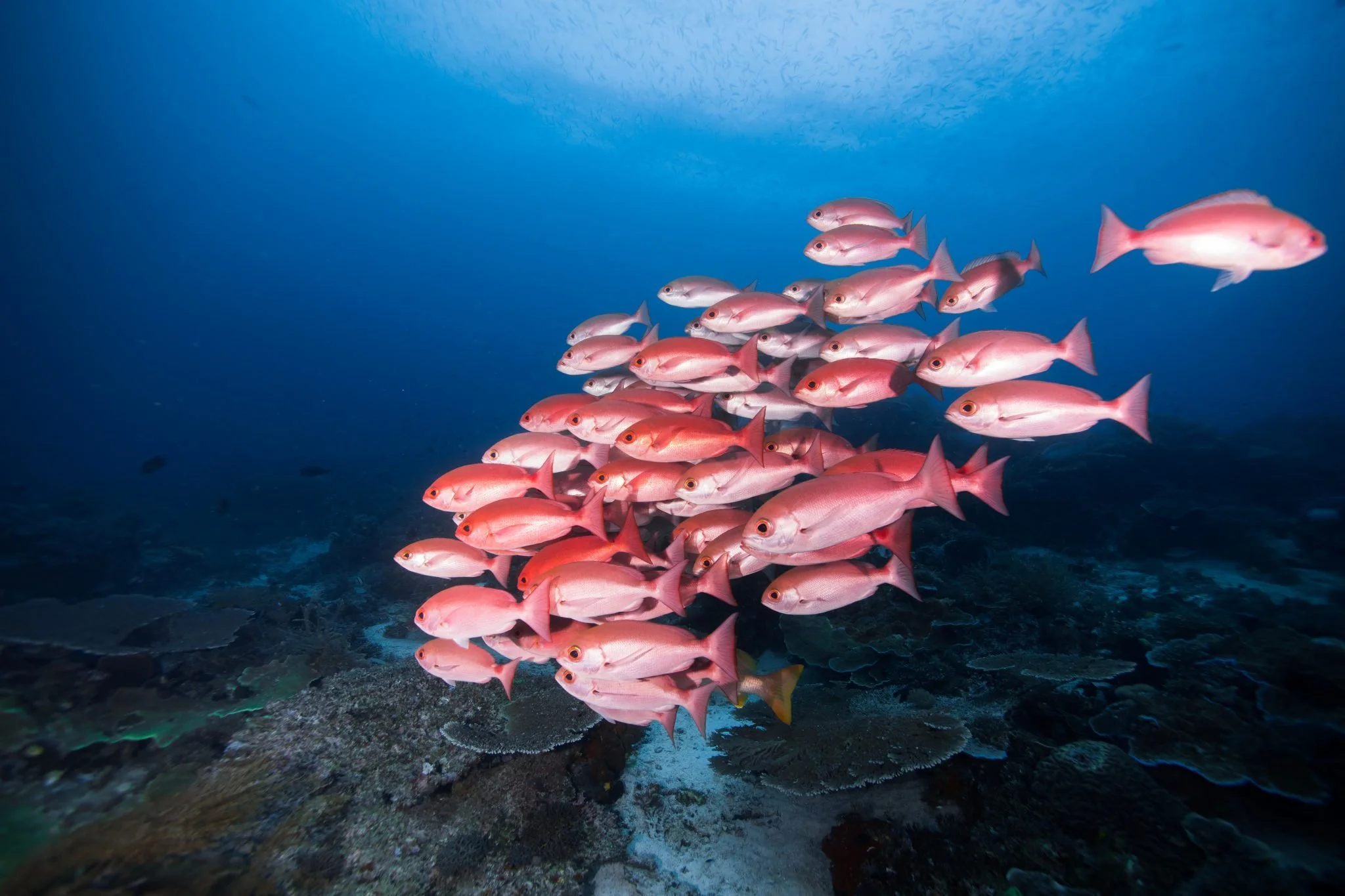
But its purpose goes far beyond imitation. The reef not only provides safe shelter and food sources for over 30 marine species, it also elevates aquatic life above the Gulf’s increasingly toxic seafloor sediments, offering a cleaner, more stable environment for juvenile fish to grow and thrive. In a region where oil-related toxins and habitat loss continue to compromise natural nurseries, this man-made reef is helping to restore ecological function and support long-term species recovery from the bottom up.
Mending the Gulf
The RGV Reef connects ecosystems by turning a once barren patch of ocean into a thriving structured environment that mimics the natural progression of marine life. More than 30 different marine species move, grow, and reproduce safely here across life stages and across space.
The reef isn’t just attracting fish. It’s actively absorbing atmospheric CO2 through biological growth which stores carbon in tissues, shells, and the food web it houses. Early research already estimates that around 70 metric tons of carbon are stored in sediment around the reef. That’s preventing 257 metric tons of CO2 from reaching the atmosphere, this is the same as removing around 60 cars off the road for a year.
Hope and Proaction
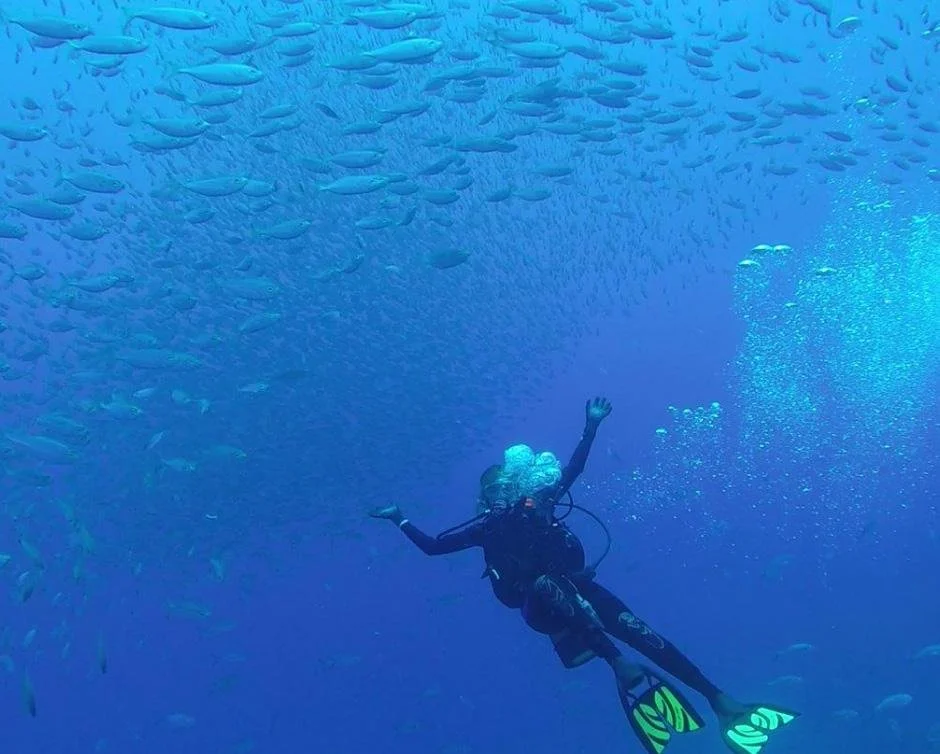
With pollution being an ongoing and unresolved crisis for the Gulf of Mexico local and grassroots efforts are stepping up despite the absence of federal leadership. Projects like the RGV Reef demonstrate how targeted, community-driven restoration can breathe life back into damaged ecosystems. By creating safe, structured habitats and elevating marine life above toxic seafloors, these efforts are not just rehabilitating species, they're reimagining what recovery can look like in one of the most industrialized waters on Earth. In a region still burdened by oil and gas, they offer something increasingly rare: hope.
To learn more about the RGV Reef and how you can support their work, visit www.rgvreef.org.
Sources:
Source: U.S. Department of the Interior. (n.d.). Gulf of Mexico Energy Infrastructure. Bureau of Ocean Energy Management. Retrieved July 2025, from https://www.boem.gov
Source: Pulster, Erin L., et al. "A First Comprehensive Baseline of Hydrocarbon Pollution in Gulf of Mexico Fishes." Scientific Reports, vol. 10, 2020, article no. 6437, https://doi.org/10.1038/s41598-020-62944-6.
Grandin, Greg. “Trump Has Brought Much‑Needed Attention to a Site of Great Tragedy: The Gulf of Mexico.” *The Guardian*, 3 Feb. 2025, www.theguardian.com/commentisfree/2025/feb/03/trump-gulf-of-mexico.
Cuba Beyond the Headlines: What Walking Across the Misunderstood Island Revealed
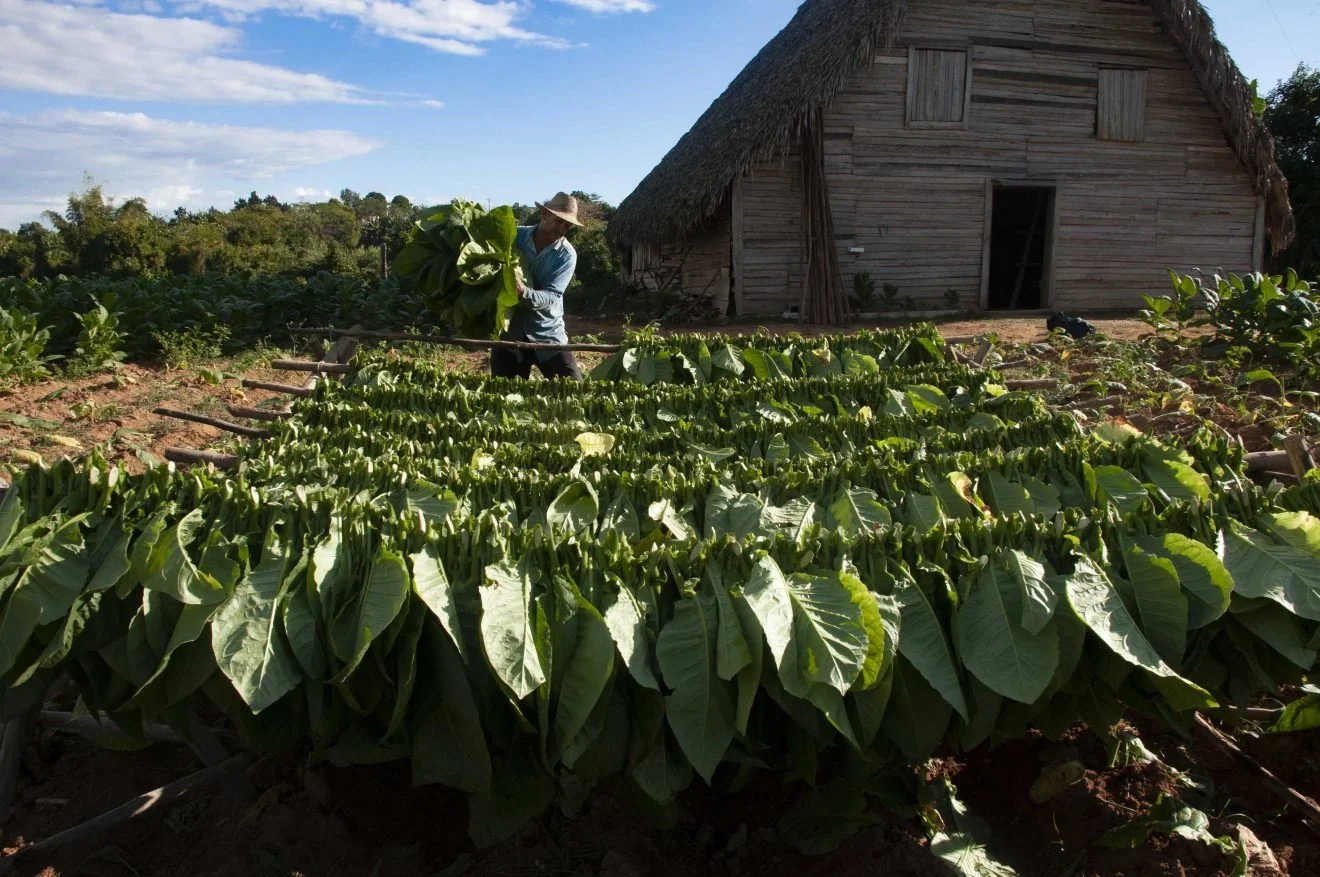
Guajiro drying tobacco leaves in Viñales, Cuba
WORDS BY HENRIQUE G HEDLER
Tell your friends that you are going to Cuba, and they will warn you that you are about to visit an authoritarian, dangerous country where they fear Americans like nowhere else on earth. While Cuba is still a communist regime, little do they know that the island is one of Latin America’s safest nations with a rich, unique culture – and best of all, they love foreigners. With no interest in visiting Cuba’s tourist destinations, staying in fancy resorts, or going on private tours, I decided to explore the country in style – traveling on foot.
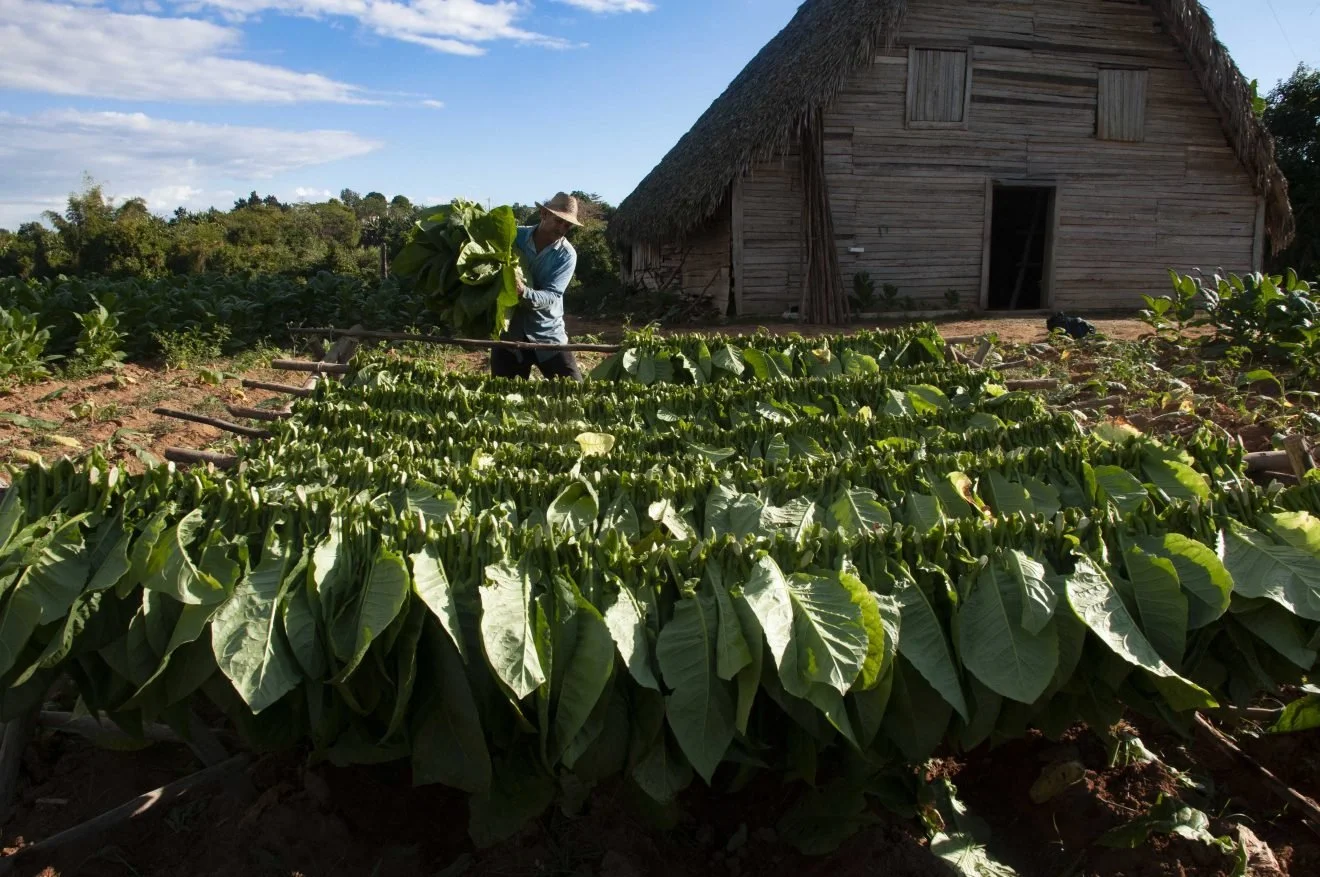
A Guajiro (Farmer) in Viñales, Cuba photographed by Henrique G. Hedler
In this story, I will share a page from my travel diary with you: a day in Pinar del Río, Cuba’s tobacco region.
Knock-knock: The door sound was just a reminder that it was time to wake up. I scrambled out of my sleeping bag, packed my camera, and sauntered outside the room. Not too shabby, I spent the night at a public school right outside of Viñales, a farming town in Pinar del Río, western Cuba. The guard, a tall man with a shaggy beard, was kind enough to let me sleep in one of the empty classrooms. By law, foreigners should only stay in houses or hotels assigned by the government, but with my $10-a-day budget and being broke as a joke, I relied on people’s generosity for a place to sleep. Cubans are known for their hospitality, rightly so.
Breakfast was bread, butter, and a cup of coffee, and then I hit the road. As I walked outside of town, the crumbling buildings faded away, giving way to one of the most scenic views I have ever experienced: rugged cliffs, bright blue sky, and the occasional working cows in the fields. For a good reason, Cuba is well renowned for its nature.
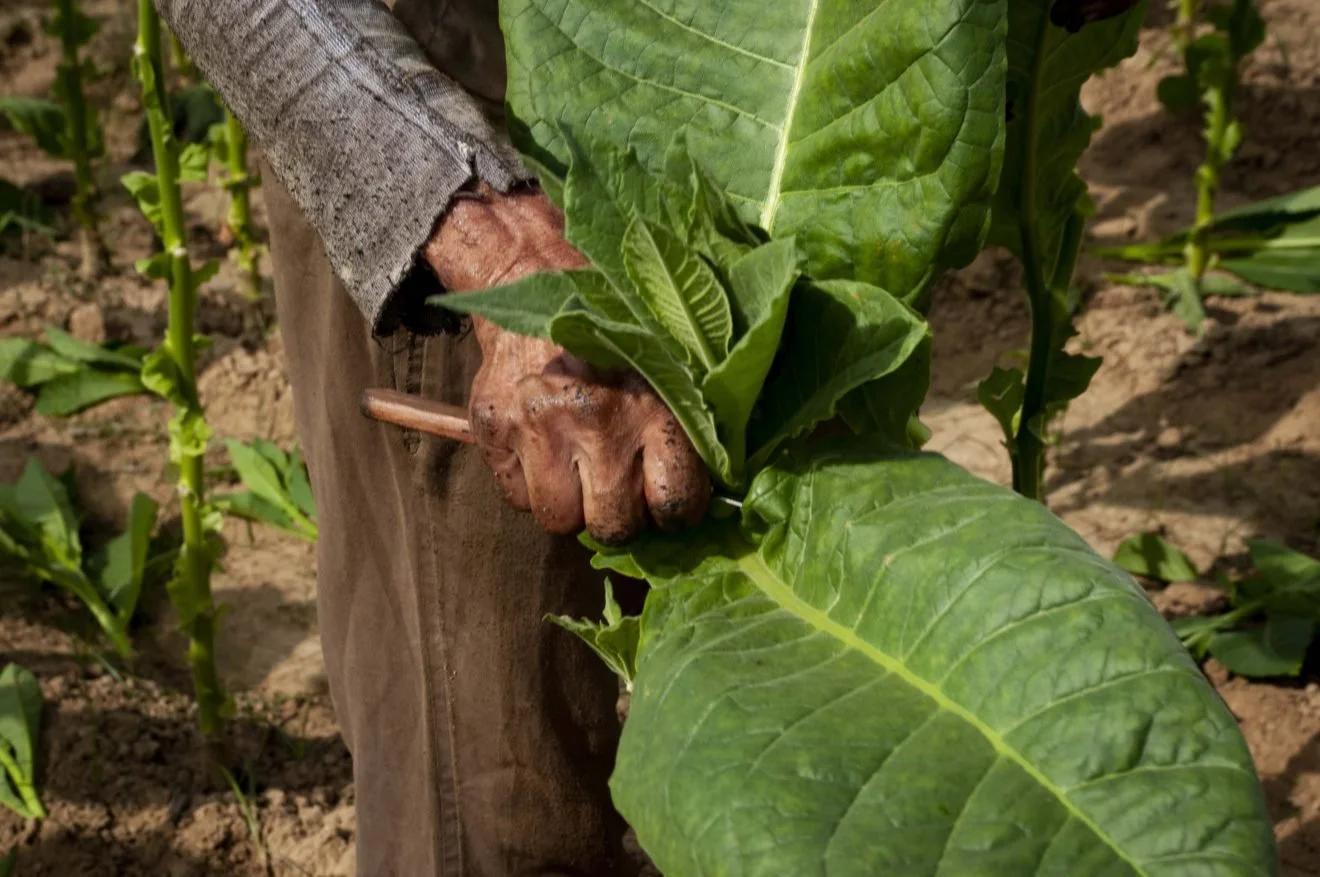
My first stop was a tobacco farm in the outskirts of Viñales. In fits and starts, I introduced myself to the guajiro (farmer) in Spanish and asked for permission to see his farm – it was the peak of the tobacco harvesting season, so there were many things to see. He welcomed me with handshakes and a smile. Juan was curing his leaves in heavy stacks inside the barn, where they hung them for several weeks. Tobacco growing is hard work and a time-consuming process- the leaves are harvested, cured, fermented, and finally used to make the almighty Cuban cigar.
Born and bred in Cuba, Juan has an intriguing life story that holds a special place in my heart. His brother died in the civil war in Angola, and his daughter was attending medical school. Cuba is perhaps one of the only countries where a guajiro’s daughter has the opportunity to learn, study, and eventually become a doctor. Here education is not a privilege but a right – and so it should be.
While he worked, we spoke about Cuban politics and history. He said that in the 1970s, the economy “was doing very well” due to the subsidies from the Soviet Union. Today, however, Cuba’s economic struggles and the shortage of meat, toothpaste, and other essential goods are widespread in rural areas. A farmworker like Juan earns about $25/month. Despite the challenges, he was optimistic about the future and always put a smile on his face.
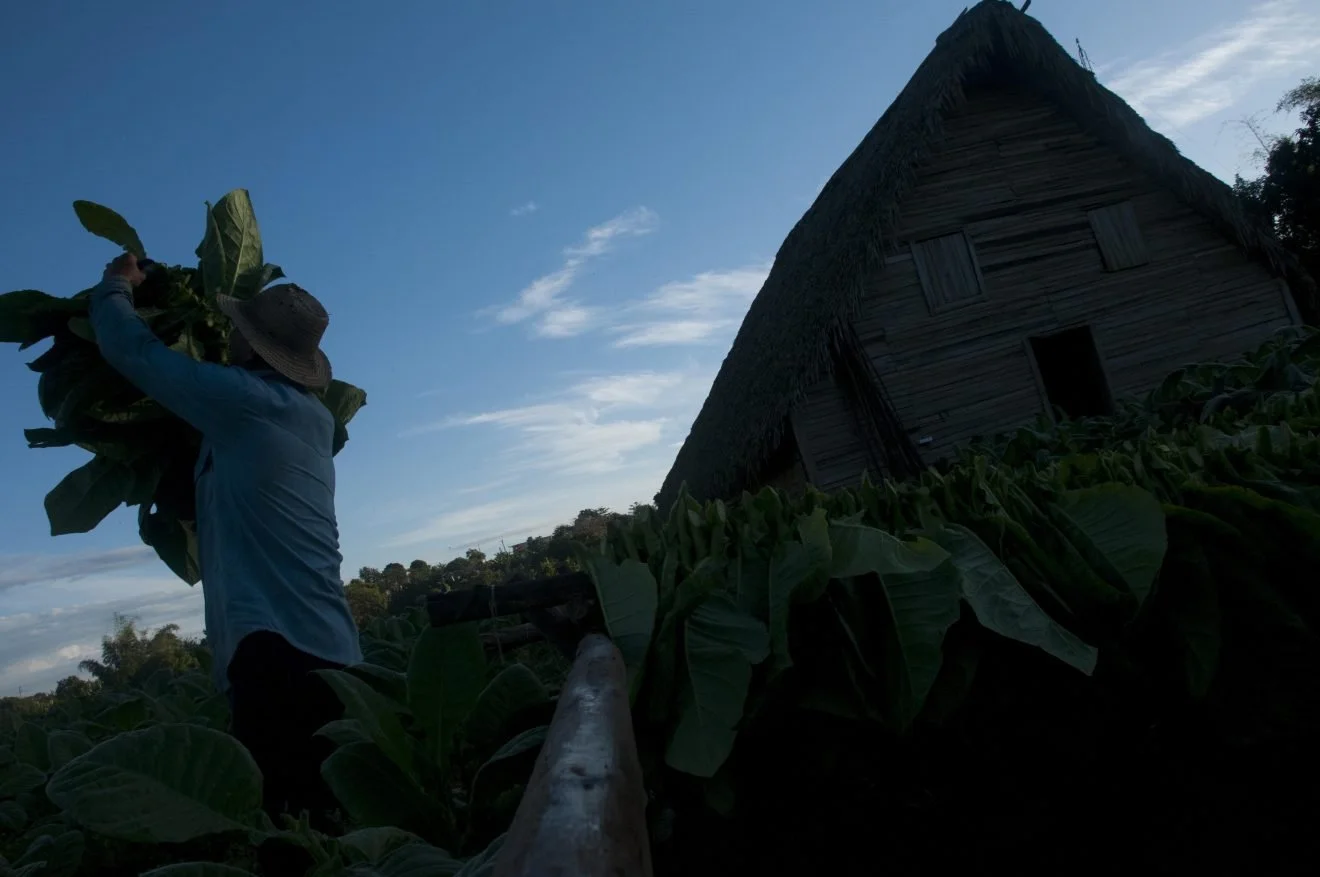
I wanted to stay all day chatting away, but I had a long road ahead of me – roughly 25 kilometers to walk on that day.
Traveling on foot in most countries can be a challenging or even reckless experience. But not here. There was hardly any traffic in the island’s rural parts- people either walk, take horse carts, or public buses. You rarely ever see cars on the road, mainly because of the US embargo. The story goes that in 1962 president Kennedy enacted the trade embargo, and since then, the island has not been able to import goods from the US or its allies. However, what the media did not expose, is that before imposing the sanction, Kennedy called his secretary to buy 1,200 Cuban cigars.
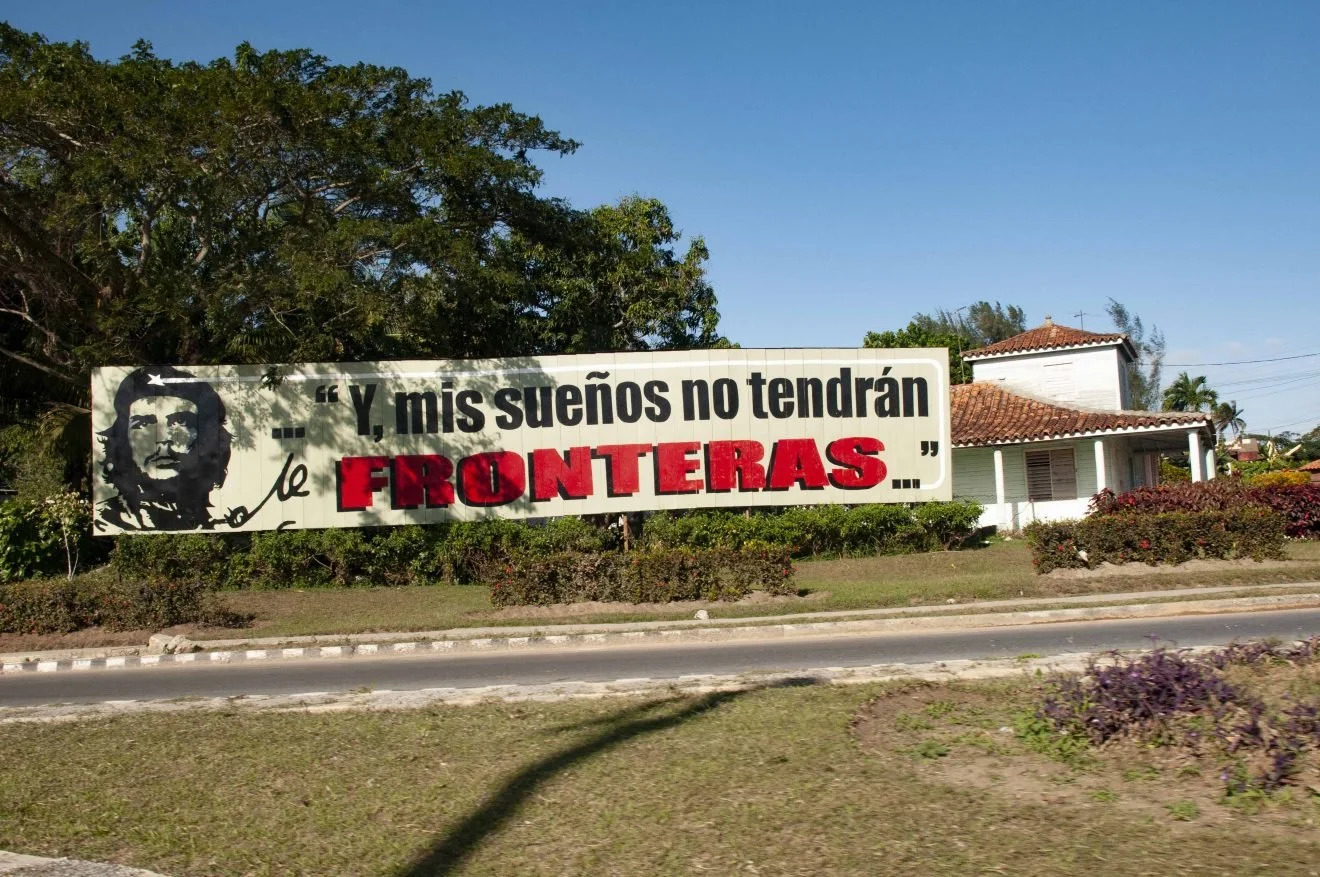
The banners with images of Fidel and signs of “Patria o Muerte” are ubiquitous on the roadside as a reminder that the spirit of the Cold War is still alive. Ultimately, what caught my eyes was the spirit of generosity, openness, and warmth of the Cuban people. It was not uncommon for home dwellers to invite me to their houses as I walked by. The idea of having outsiders at home was appealing, but they were also genuinely interested in offering water, food, or whatever they had to share. I contributed, giving them clothes and other small basic items that I carried in my backpack. Puzzled about my travel plans, the locals almost always asked the same question “Why are you walking across our country?”
Traveling on foot might sound strange, or maybe even revolutionary, but this way, I had the opportunity to see Cuba through the eyes of its people. Fidel Castro once said that foreigners “don’t understand that our country is not just Cuba; our country is also humanity.” His words inspired millions, and with that in mind, I kept on walking.
Sobremesa
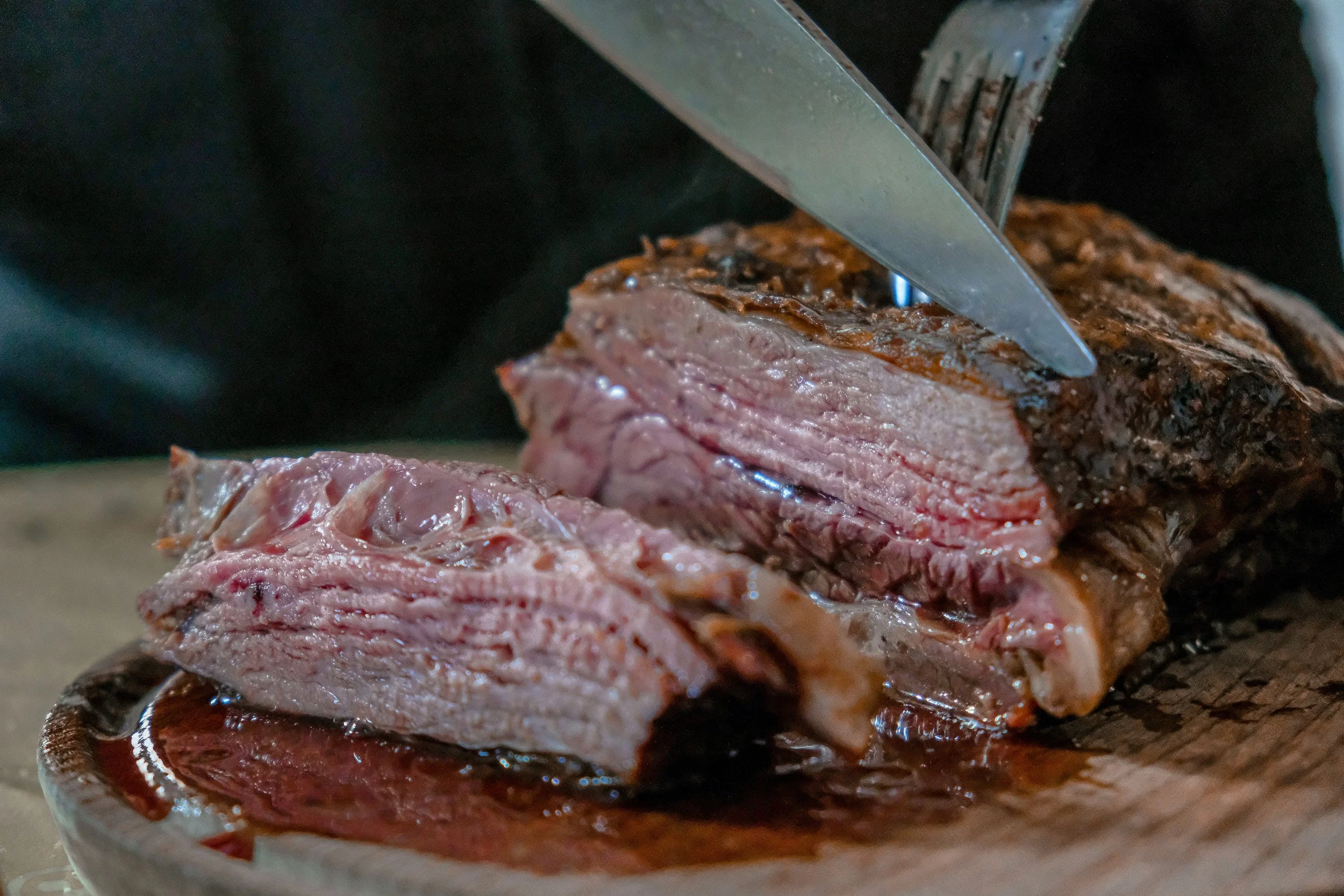
Argentinian Asada
WORDS BY AXEL BREVE
Most take sharing food for granted. For starters, it’s hard to value something one must do daily. It’s also hard to value something which you repeat as a habit throughout your life. The effect of performing mindless acts ultimately minimizes the value we feel in the little things we do everyday. However, I want to address the act of not only eating but of sharing a meal with others, the beautiful and intriguing energy it exudes from us and to those around us.
Consider the concept of Sobremesa (Soh-breh-meh-sah), which directly translates to “upon the table.” This term is known throughout Latin-based countries in Europe and South America. It refers to the extra time after the entree, spent continuing a good conversation with the people you’re sharing the meal with. Semantics aside, and for the purpose of this article, what sobremesa means to me is the exact same definition as above, but without this silly concept of it being after the entree. This is because our conversations, arguments, laughter, even bullshitting, shooting the breeze, debates, and discussions all begin as soon as the guests walk through the door and we exchange kisses. As we sit down around the table filling wine glasses and whipping up classic cocktails, sobremesa beings.
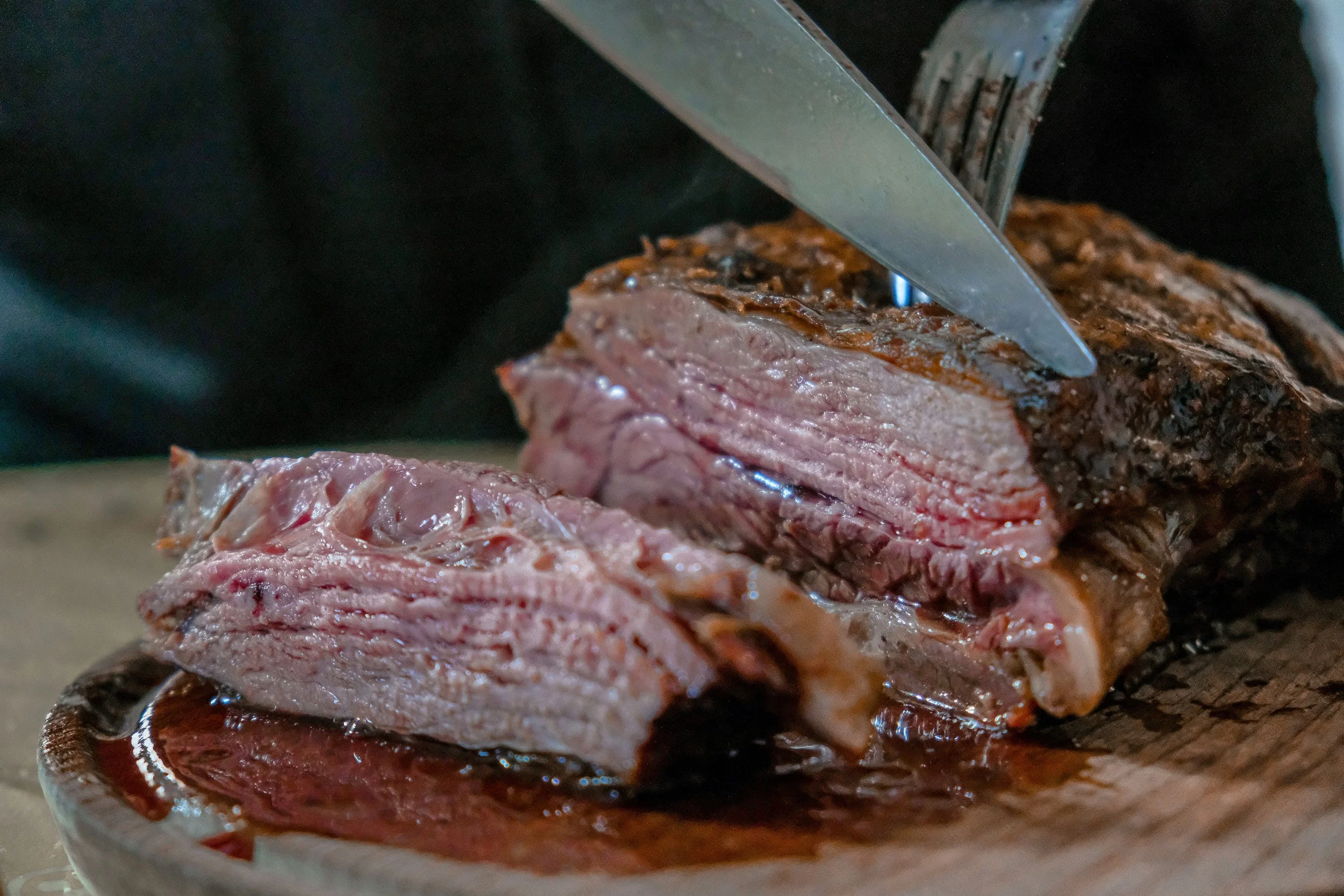
Photo by Jose Ignacio Pompe
Throughout a meal we gather closer and closer: physically, mentally, and spiritually. Always readjusting our seats for a proper or comfortable appearance, depending on who the table is being shared with. Sometimes chairs are pulled closer because of the interest of the conversation. Other times the chair ends up a couple feet away from the table to comfortably throw one leg over the other and just listen. All the while easing into the space with those around us, as we fill stomachs with solids, fluids, and later, gases.
This phenomenon, in my humble opinion, is the dissolving of our guards and the embrace of our vulnerability. The main contributing factor is the food that is being served to the people. As I’m sharing this with the readers, let’s set aside the training I’ve had entertaining guests and making what many have called good food. When you invite people to your table and share a meal with them, that you cooked or not, it definitely involves intimacy. As mentioned above, the phenomenon is that people become more vulnerable around food. It could possibly be because of mothers having to feed children or first sharing meals with your family or community as a young child. But that’s another topic for another communion. As that happens, people can communicate more honestly. And with more honesty, comes more thoughtfulness.
I noticed this old-as-time phenomenon, or Sobremesa, when I was extremely young. It was easy to point out. As a family, we’d occasionally share breakfasts together, lunches on the weekend, and dinners almost every night. However, the frequency of these shared meals didn’t point it out to me. It was the fact that our dinners lasted 2+ hours. Setting the table properly, having multiple dishes, and having to wash plates made it even longer. As a child, time is a hard-to-grasp concept. It either goes too slow or too fast. In this case, sitting around the table hearing the “adults” talk made it seem like an eternity. I didn’t understand how people could have such a great time sitting down and talking. However, now I pretty much embody this philosophy, both professionally and spiritually, everyday. It is something I enjoy, not to mention am.
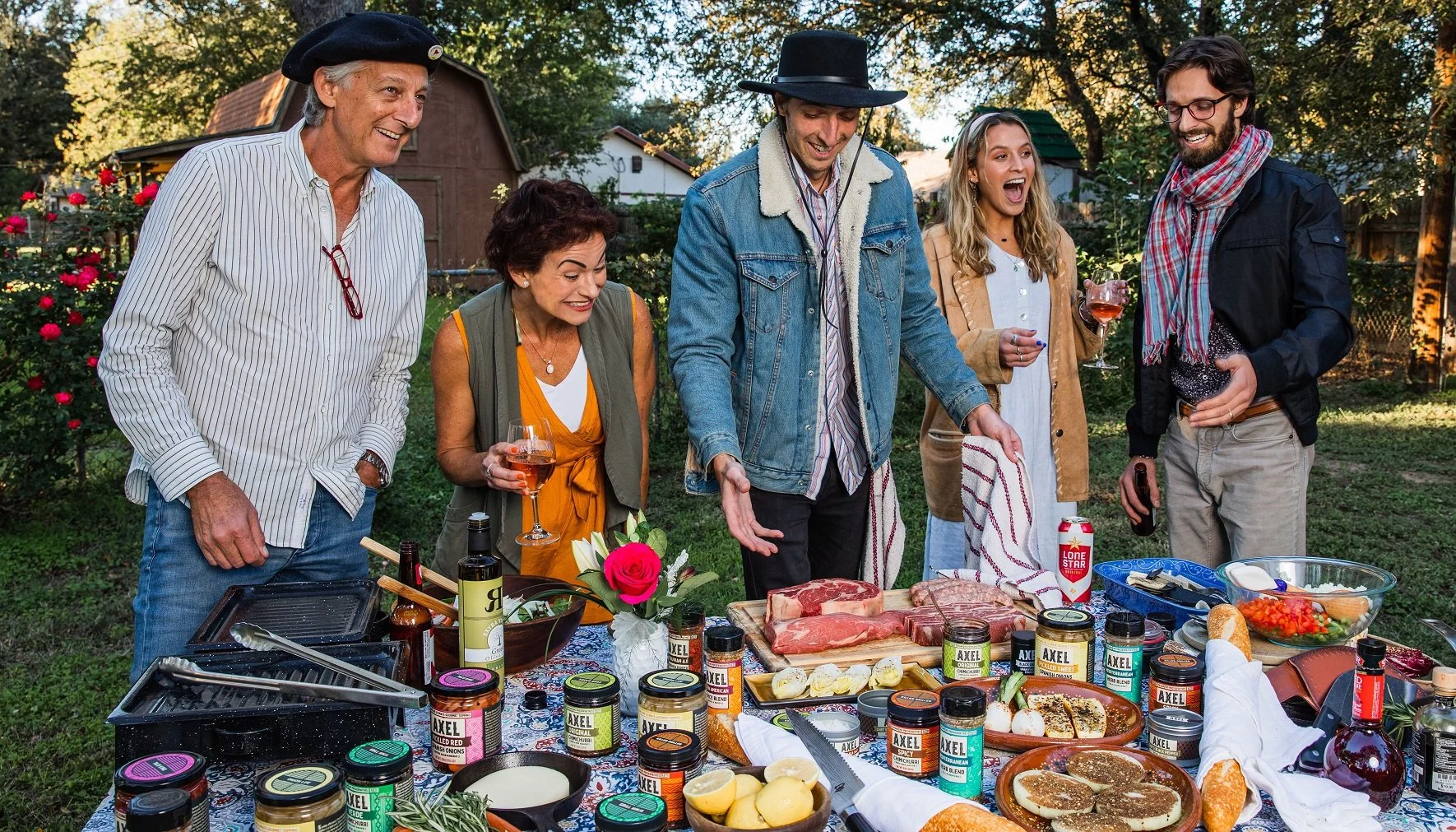
Axel and his family. Photo courtesy of Canvas Rebel Magazine
As an Argentinian-American, our one-a-week church day is either Saturday or Sunday while hosting an Asado. It is our ceremony–our religion. Asado means a grill out over open flames, including all sorts of premium cuts of meat and plenty of seasonal vegetables. For brevity, I won’t include the extensive list of what can be grilled over an open-fire. I want to just share the style of get-togethers we create to spend quality time with one another. Having a roaring yet controlled fire that cooks the food we prepared with recipes we’ve passed along to those we care about allows for magic to happen. People can connect and relate to each other. People begin to feel welcome to our family as we break bread with one another. This invitation allows for people to be comfortable with each other and be more intimate. Naturally, conversations occur because everyone is comfortable, and fed. This is what I call Sobremesa.
My admiration for Sobremesa has led me to start a food brand that evokes this feeling of enjoying company of one another around shared meals. The only way I know how to do this is through what my family has taught me, which translates to my products. These family recipes are now replicated into jars and always at the center of my feeding extravaganzas. I see this bringing people closer; while grabbing seconds and spilling wine glasses and bursting out many laughs. Most importantly, I get to live this experience over and over again with every meal, finding deep comfort in the giving. The vulnerability I receive from people, the knowledge I gather, and the memories I create is something that I hold close to my heart.
As the world continues to grow and allow for me to share more of these experiences with old and new faces, I’m hopeful that more people will be able to participate in Sobremesa. As Latin roots spread across the world and cultures begin to enfuse with one another, I envision people will want to spend more quality time with those dynamic loved ones around them. May your next meal be the vehicle for interconnectedness to flourish.
A Conversation on the Lacandona Jungle
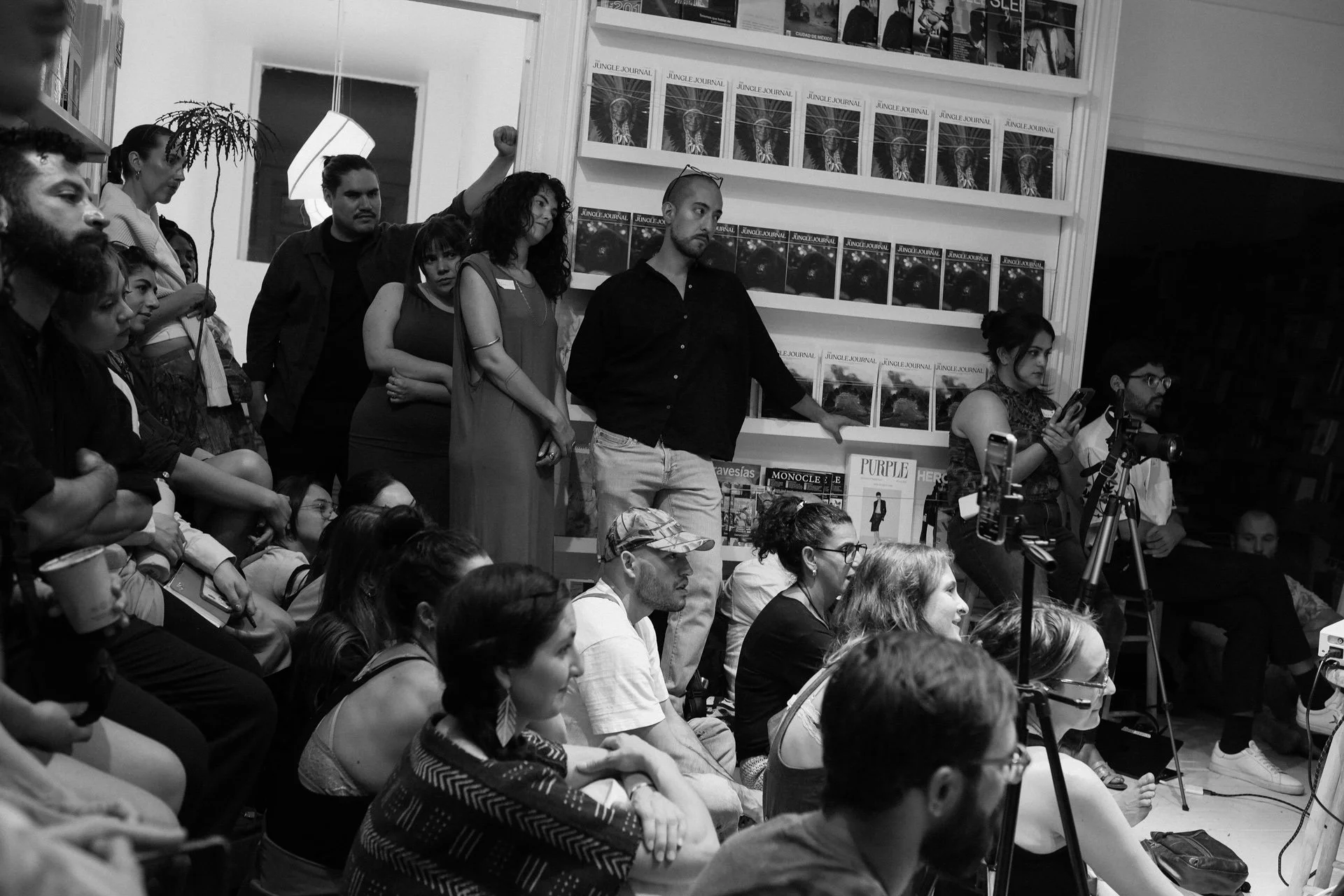
Group gathers to watch a conservation discussion on the Lacandona Jungle in Mexico City
Thursday, 5 May 2024, 6:30-8:30 pm, Casa Bosques, Córdoba 25, Roma Nte. Cuauhtémoc, 06700 Ciudad de Mexico, CDMX
PHOTOGRAPHY BY ROSE ROOSJE
A reflection on the short documentary screening and panel discussion on conservation, cultural heritage, and the local and international efforts for ecological protection of one of North America’s last rainforests.
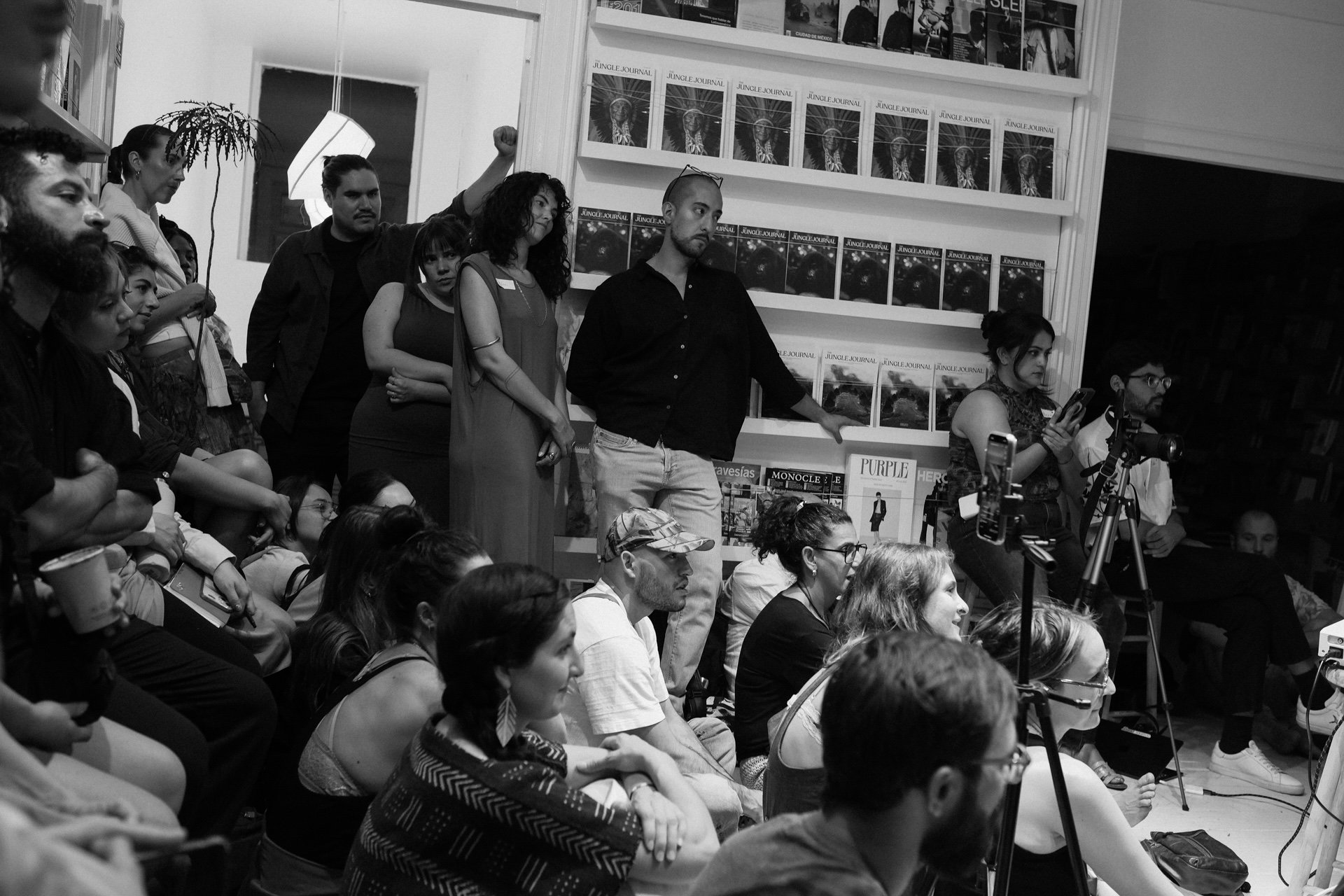
An engaged audience fills Casa Bosques in Mexico City during a Jungle Journal panel on the Lacandona Jungle, a conservation event discussing Indigenous stewardship and rainforest protection.
The Jungle Journal hosted its first short documentary screening and paneled event, titled A Conversation on the Lacandona Jungle, at Casa Bosques Librería in the vibrant Roma neighborhood of Mexico City. The event brought together experts, researchers, and advocates to explore the evolving challenges facing one of North America's last remaining rainforests.
Lacandona, a mini-documentary chronicling the Yuk Najkin family—a Lacandona Maya family that has lived for generations in the heart of the rainforest—offers an intimate glimpse into their world. Through their story, the audience is invited to experience the jungle through the family's eyes and understand the growing threats facing their culture and community. Filmed in the Lacanjá Chansayab community, nestled within the Montes Azules Biosphere near the Mexico-Guatemala border, the documentary captures both the beauty of the region and the urgency of its preservation.
Following the screening, a dynamic panel discussion unfolded, offering deeper insights into the documentary’s themes. Panelists shared their work on wildlife conservation, Maya language preservation, and the cultural significance of cacao in Mesoamerican traditions. Their perspectives intersected with broader discussions on conservation, indigenous rights, and the impacts of deforestation, drawing from both academic research and lived experience.
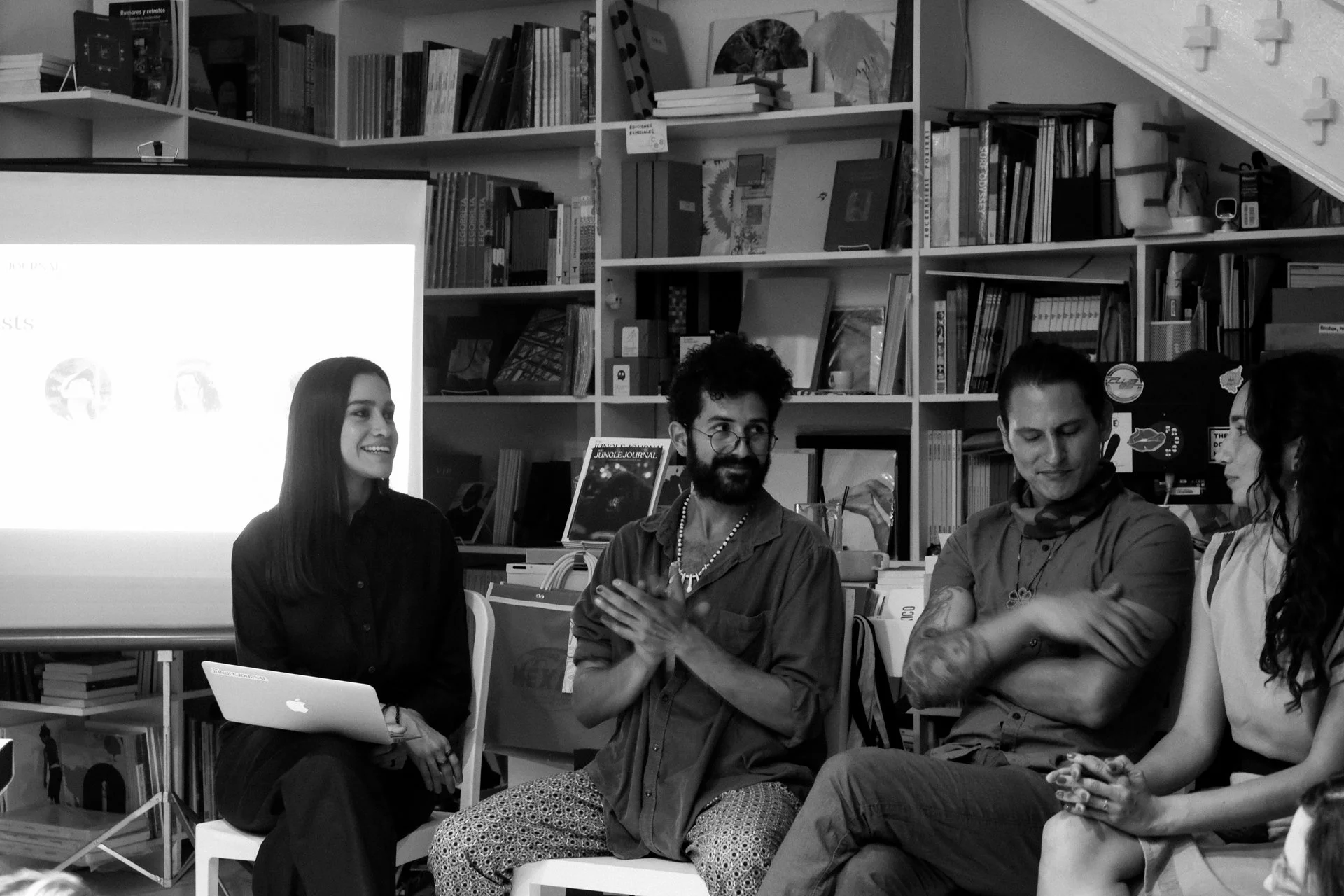
Founder, Sara Lopez, alongside panelists Pablo Castro Hernandez (Sociologist), Alan Monroy Ojeda (Ornothologist), and Maria Alejandra Forero (Cacao systems scholar)
Over the past five decades, the Lacandona Jungle has undergone profound changes. Outside stakeholders encroaching on land and resources, agricultural and commercial expansion, organized criminal networks, and increasing Western influence have not only contributed to deforestation but have also disrupted the cultural and spiritual systems of local indigenous communities. Practices and beliefs that once deeply connected these communities to the jungle are now under serious threat.
The evening began with a screening of Lacandona, a short documentary directed by our founder, Sara Lopez, with cinematography by Danila Iliushchenko. One of the film’s most poignant moments comes when Chansaap, a member of the Yuk Najkin family, reflects on the evolving relationship between his community and the land. Walking through his cornfield, he explains the traditional Milpa system—a centuries-old Maya agricultural practice rooted in communal collaboration. But as the scene unfolds, he describes how this once-shared practice has shifted toward privatization, pushing the community away from its cooperative roots.
The short documentary also touches on broader changes, from religious shifts to lifestyle transformations, underscoring how external influences have reshaped daily life. Yet at its core, Lacandona is a testament to the Yuk Najkin family’s resilience. Despite these profound changes, one value remains unshaken: family unity—an enduring pillar of Lacandona culture. Chansaap expresses hope that future generations will rediscover their heritage and reclaim their traditions.
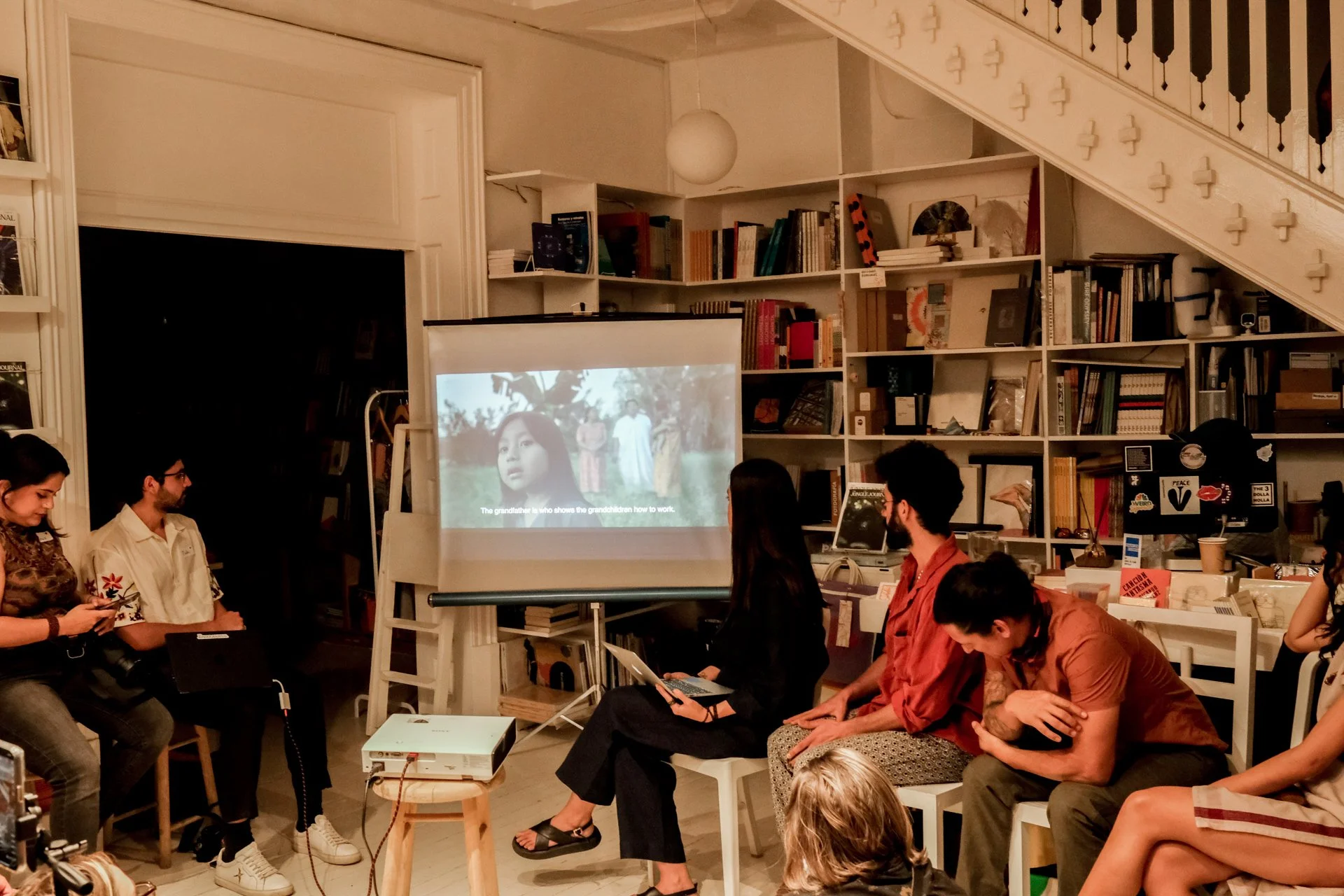
After the screening, the panel discussion began, highlighting the panelists' groundbreaking research, community partnerships, and direct action, all of which have played a pivotal role in preserving the jungle's ecosystems and advancing advocacy and policies that protect both the environment and the indigenous communities who call the jungle home.
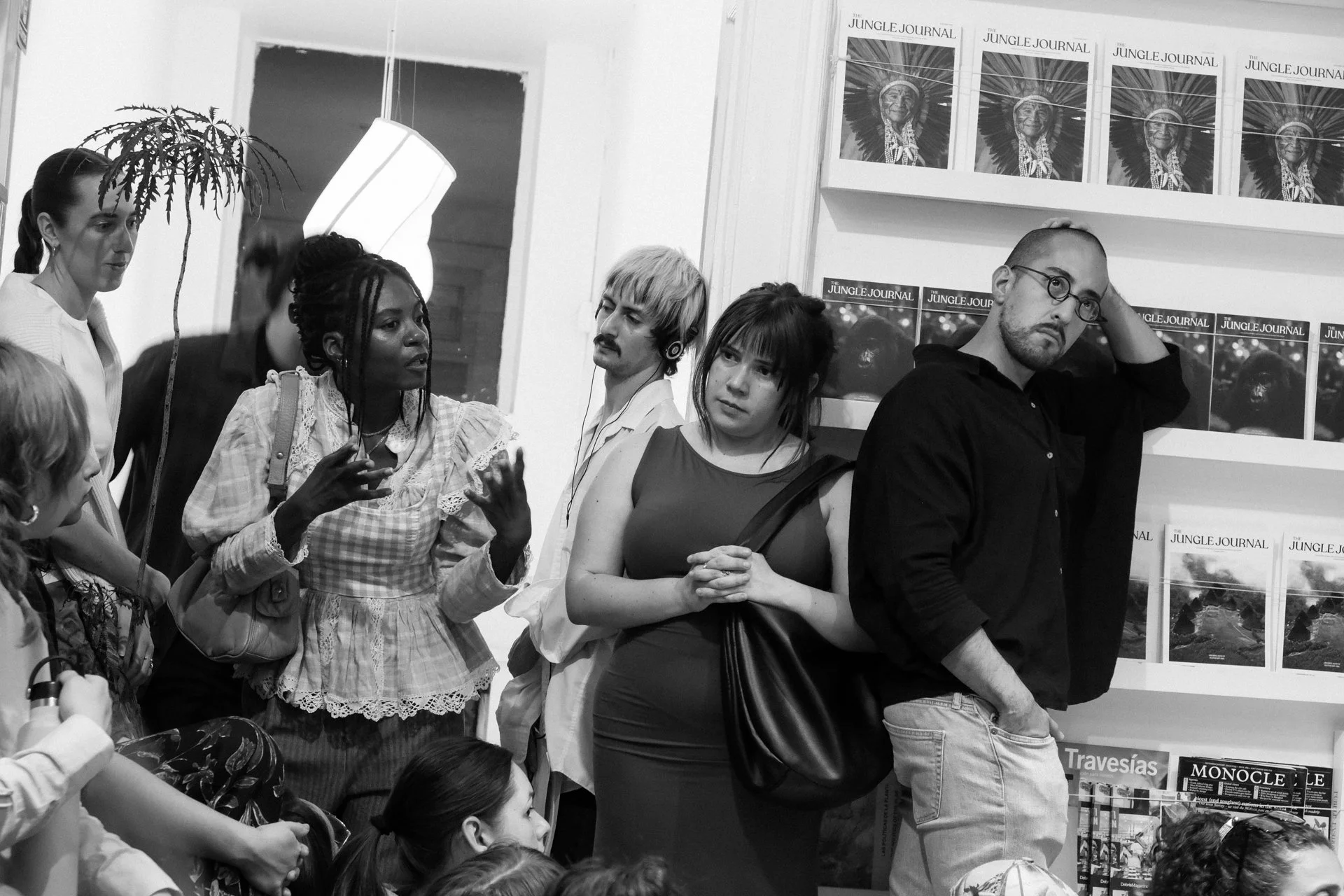
The discussion illuminated the intersection of cultural heritage, environmental conservation, and the resilience of the dependent indigenous communities residing in the Lacandona Jungle: the Lacandon Maya, Tzeltal, Ch'ol, Tzotzil, and Tojalabal. Panelists emphasized the vital role of indigenous knowledge in safeguarding biodiversity and the urgent need to support these communities. Promoting more political representation, legal protections, and economic empowerment and autonomy through their tourism industries. The later involving the direct managing of tourism initiatives, and receiving fair economic benefits. The conversation underscored that the Lacandona Jungle is not just an ecological treasure but a living cultural landscape shaped by the wisdom and traditions of its people.
The event served as a poignant reminder of the pressing need to protect both the natural environment and the cultural traditions that have sustained it for centuries. We hope that A Conversation on the Lacandona Jungle will continue to inspire dialogue, foster action, and strengthen collaborations in the ongoing efforts to preserve one of the world’s most biodiverse and culturally rich regions.
This event was made possible with the generous support of POXNA, whose dedication to preserving tradition brought a meaningful touch to the evening. Guests enjoyed handcrafted Pox cocktails, a tribute to the centuries-old Mesoamerican tradition of Pox—a sacred corn spirit with origins dating back to the Maya civilization.
Panelists
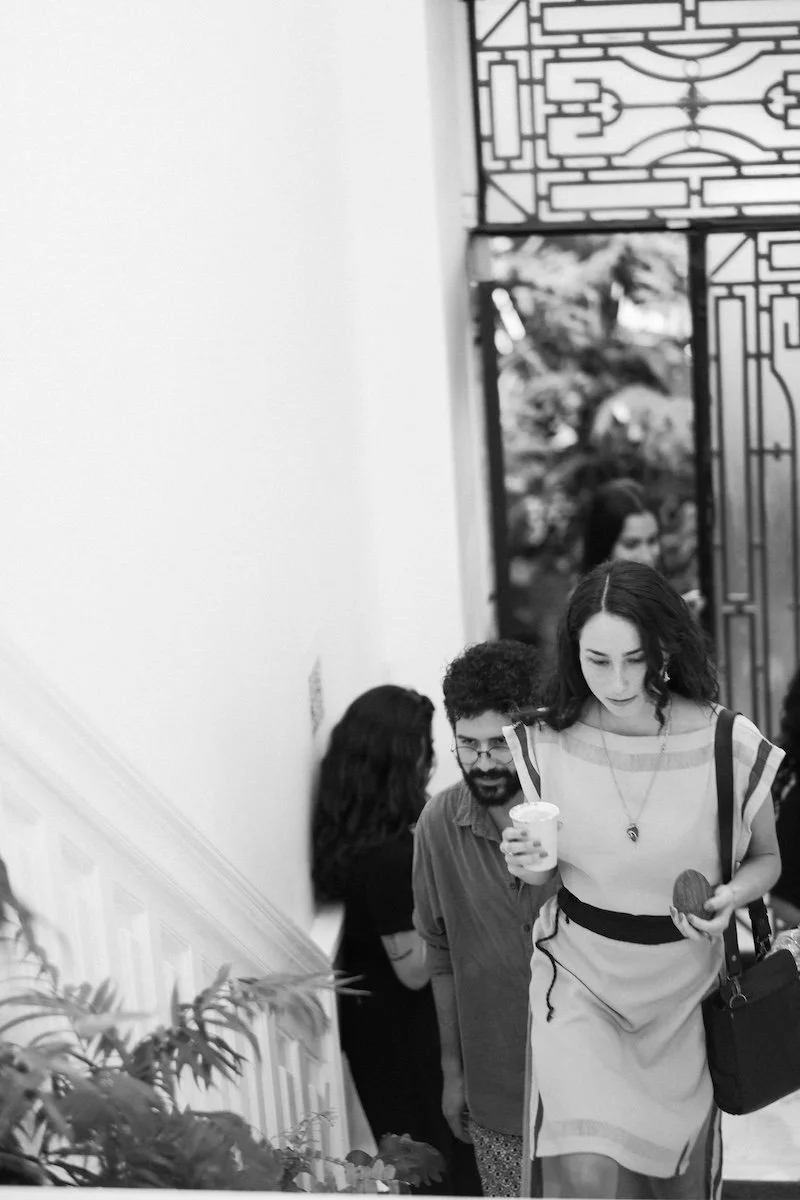
Maria Alejandra Forero, a cacao researcher and co-founder of JANGALA who is currently working with midwives in the region, studying the historical and cultural significance of cacao within indigenous traditions
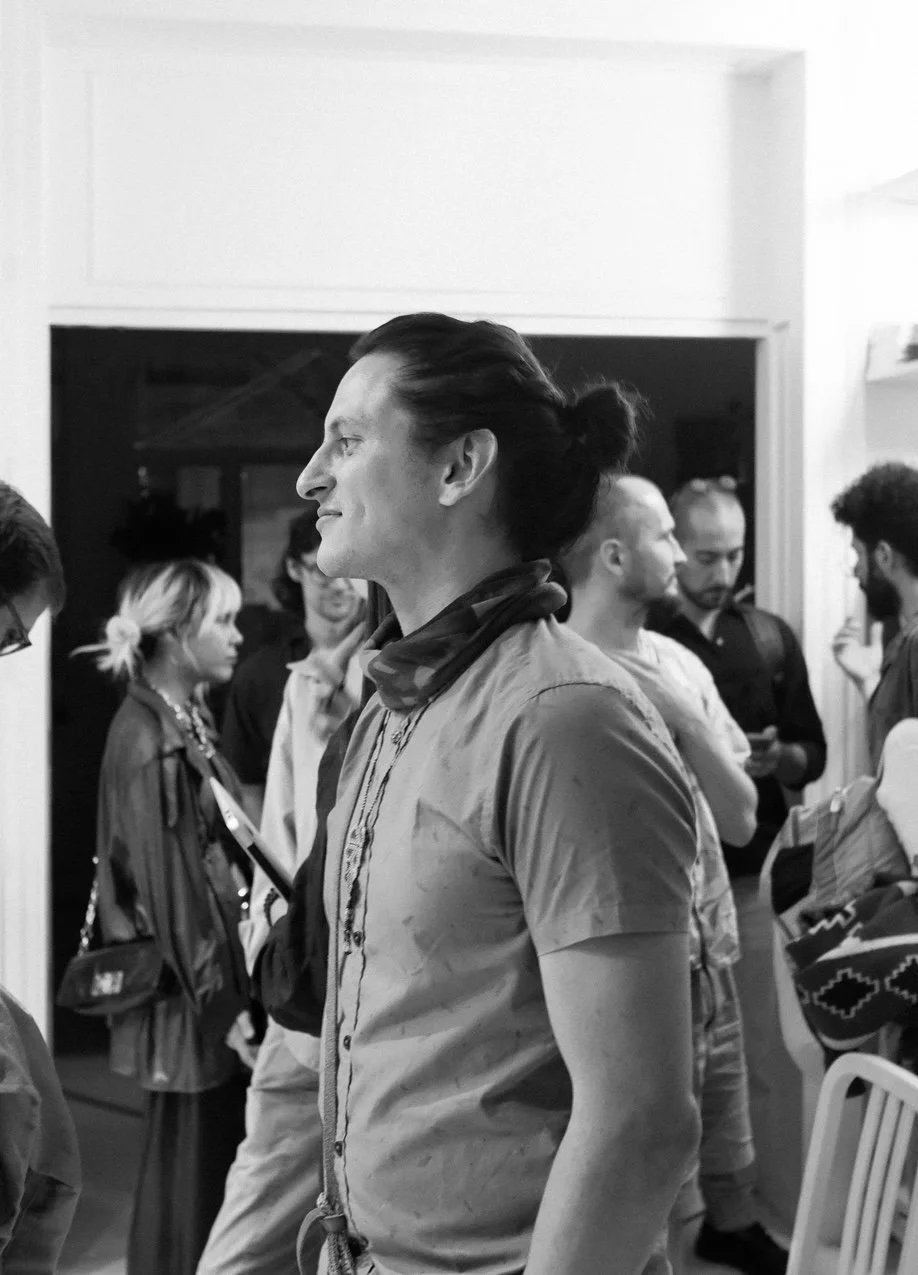
Alan Monroy Ojeda, an ornithologist whose research centers on raptor species, particularly the majestic Harpy Eagle, and conservation strategies to protect these apex predators and their ecosystems in the Lacandona Jungle.
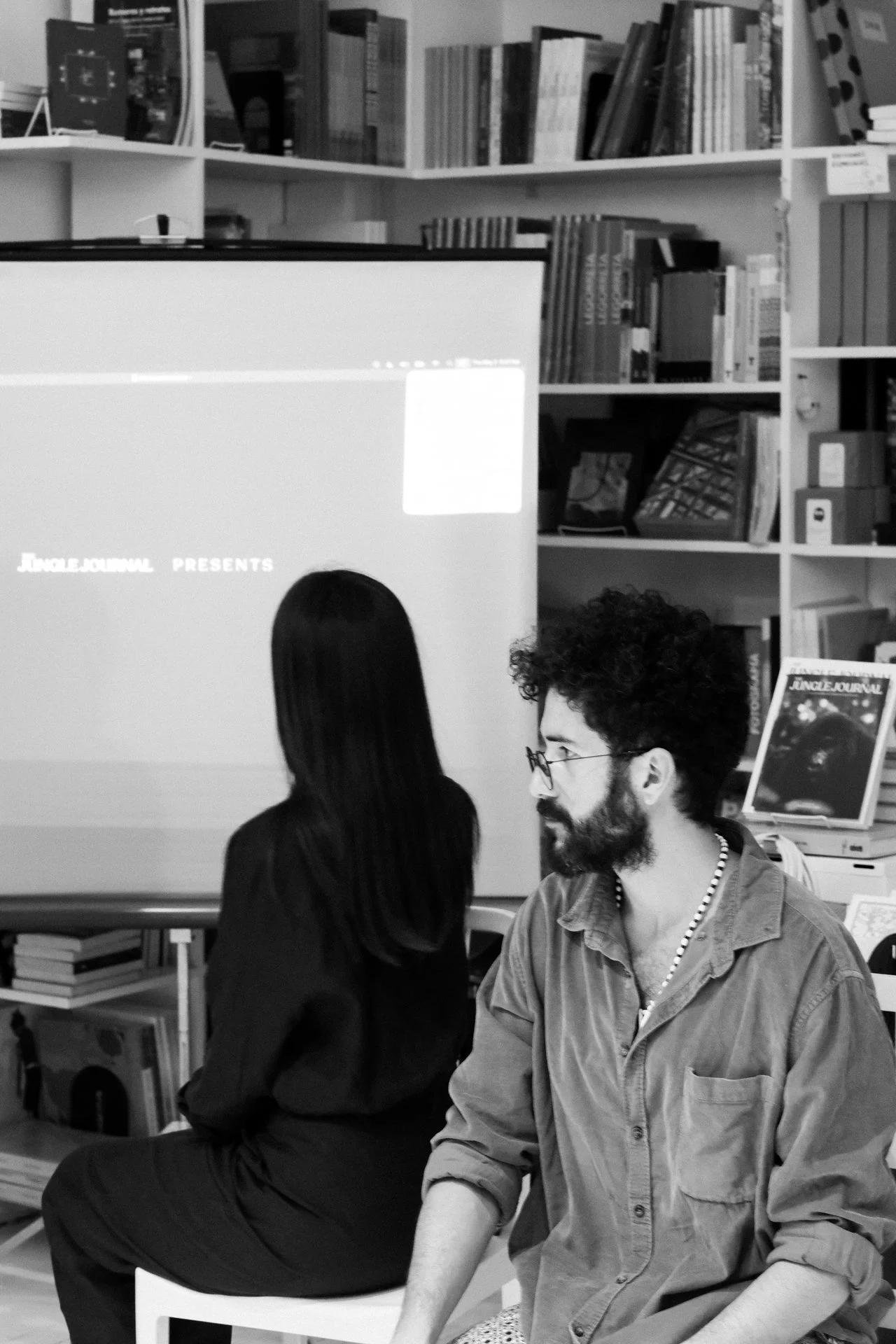
Pablo Castro Hernandez, a sociologist who has spent over a decade traveling to Maya descendant communities in Chiapas, Mexico to preserve and revitalize indigenous languages, ensuring that younger generations maintain access to their linguistic heritage.
The Battle to Save Akumal
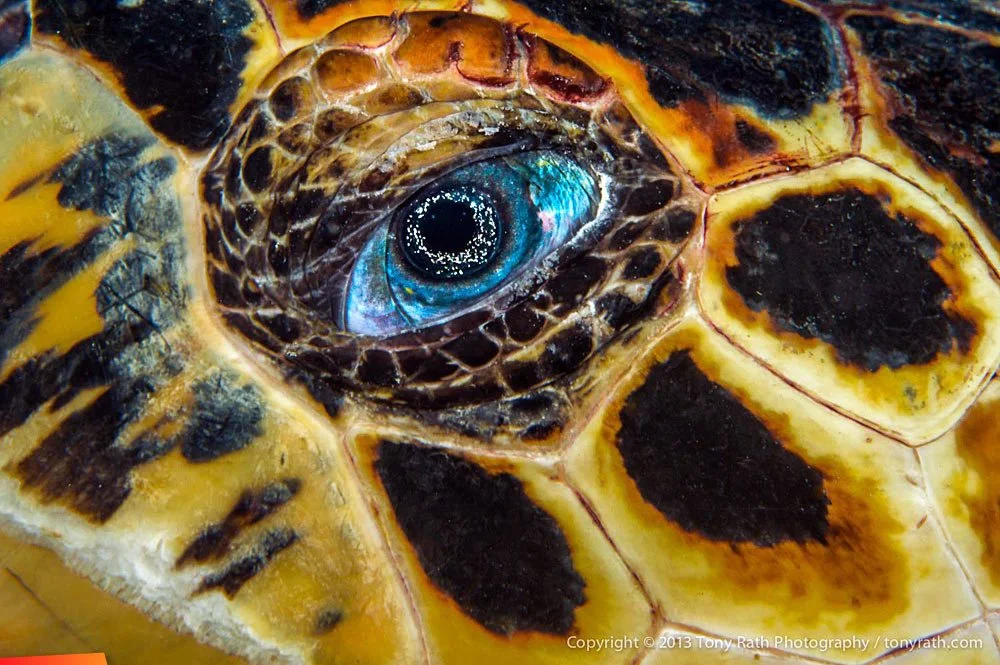
Hawkbill eye
Words by Lily Dayanim and Sara Lopez
Sea turtles have been coming to Akumal for thousands of years, long before resorts, roads, or even the rise of the ancient Maya.
The name Akumal, meaning “Place of the Turtle” in Yucatec-Maya, reflects its ancient and ongoing role as a vital sanctuary where green, hawksbill, and loggerhead turtles return generation after generation to feed and nest. But in recent decades, this timeless rhythm was disrupted by rapid development and mass tourism.
A Sanctuary Under Threat
Located approximately 27 kilometers north of Tulum, Akumal, like many towns along the Riviera Maya experienced a tourism boom. As a consequence, Akumal Bay began to suffer the consequences. Still lacking formal protected status, the bay began receiving thousands of visitors per day during peak high seasons.
Tourists entered the bay’s waters wearing chemical sunscreens, trampling fragile seagrass beds, crowding marine wildlife, and in some cases, physically interacting with sea turtles by touching or even standing on them. The impact was devastating. What had once been a peaceful refuge was quickly becoming an ecological pressure cooker.
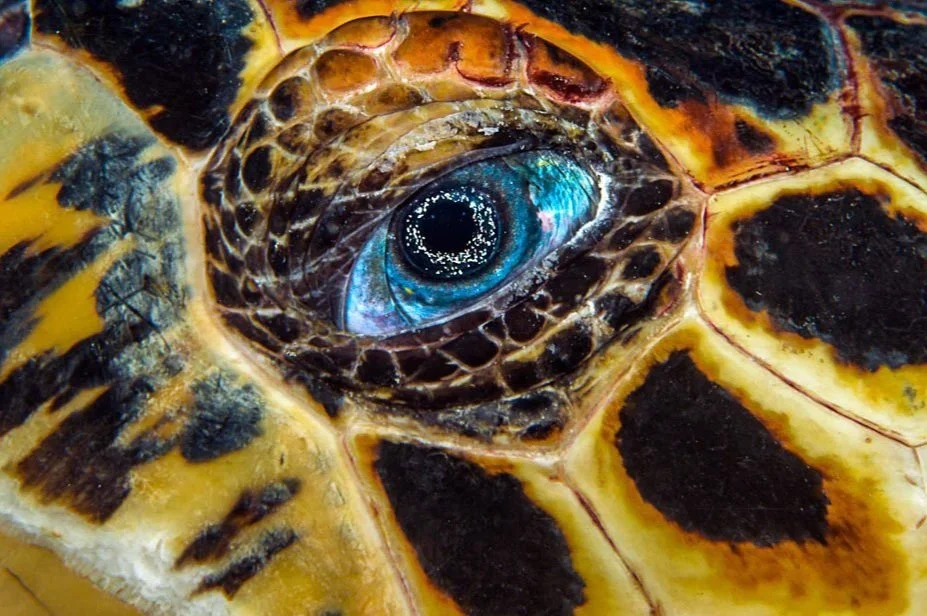
The Yucatán Peninsula—particularly the coastal region of Quintana Roo and Akumal Bay—is a vital nesting ground for Atlantic hawksbill sea turtles.
A Fight For Protection
The warning signs were clear to those who knew the bay best. Since the early 1990s, the Centro Ecológico Akumal (CEA) had been advocating for protection, developing conservation plans, and urging Mexico’s federal government to recognize Akumal’s ecological significance.
Their advocacy gained momentum through the support of local residents, environmental groups, and widespread public petitions. Yet for years, the bay remained without the legal tools necessary to regulate the rapidly growing tourism industry.
Then came a turning point. Local boat captain Cuitlahuác, widely known as “Captain Quickie,” took the fight into the legal arena. He sued the Mexican federal government to demand protections for Akumal’s marine habitat and its endangered turtle population.
Meanwhile, in 2013, scientists from Operation Wallacea, a conservation research and youth education institute, launched a long-term study of the bay in partnership with CEA and the Akumal Dive Centre. Their goal was to document the impact of unchecked tourism on sea turtle health and marine habitats.
The Data that Turned the Tide for Akumal Bay
The findings were alarming.
Turtles in Akumal were exhibiting signs of fibropapillomatosis, a disease linked to contaminated waters and chronic stress. Characterized by the growth of tumors on the skin, eyes, and internal organs, the condition can impair movement and vision, and in severe cases, become fatal.
Researchers traced the source of this health crisis to overcrowded snorkel zones, vanishing seagrass beds, and pollution from sunscreen and untreated waste. Their scientific data formed a compelling case for immediate conservation action.
In 2016, after years of community advocacy, scientific research, and legal pressure, the Mexican government officially designated Akumal as a Marine Refuge for Protected Species.
A Marine Designated Site
This designation triggered a series of much-needed changes. Tourist activity was capped. A “Turtle-Only Zone” was established to allow turtles to feed undisturbed. Infrastructure such as biodigesters and public restrooms was introduced to reduce contamination. Only certified guides were permitted to lead small, regulated snorkel groups.
By 2024, the impact was undeniable: hundreds of green and loggerhead turtle nests were documented, and nearly 50,000 hatchlings were released back into the wild. These numbers reflect a healthier ecosystem, supported by reduced pollution, improved beach management, and the recovery of key habitats like seagrass beds.
A Global Reminder
Even if you’ve never visited Akumal, its story matters. The bay is part of the Mesoamerican Reef—the second-largest reef system in the world—and plays a vital role in supporting global biodiversity. What happens in Akumal has ripple effects far beyond Mexico’s coastline.
This small corner of the Yucatán Peninsula serves as a blueprint for how grassroots organizing, science-based advocacy, and inter-institutional collaboration can restore a fragile ecosystem.
Akumal teaches us that respectful tourism is possible, and that communities, when empowered by knowledge and action, can drive meaningful environmental change.
Protecting places like Akumal is not just a local responsibility—it is a shared duty that touches us all.