
10 Museums Honoring Indigenous Knowledge in the Americas
WORDS BY SARA LOPEZ
This list features museums selected not only for their collections but for how they center Indigenous voices, challenge colonial narratives, and honor cultural continuity. In our rapidly changing world, these are physical spaces where memory lives, knowledge is preserved, and Indigenous perspectives lead the way. If you're traveling through the Americas and find yourself in any of the following cities, these museums are well worth a visit.
MUSA: MUSEU DA AMAZONIA
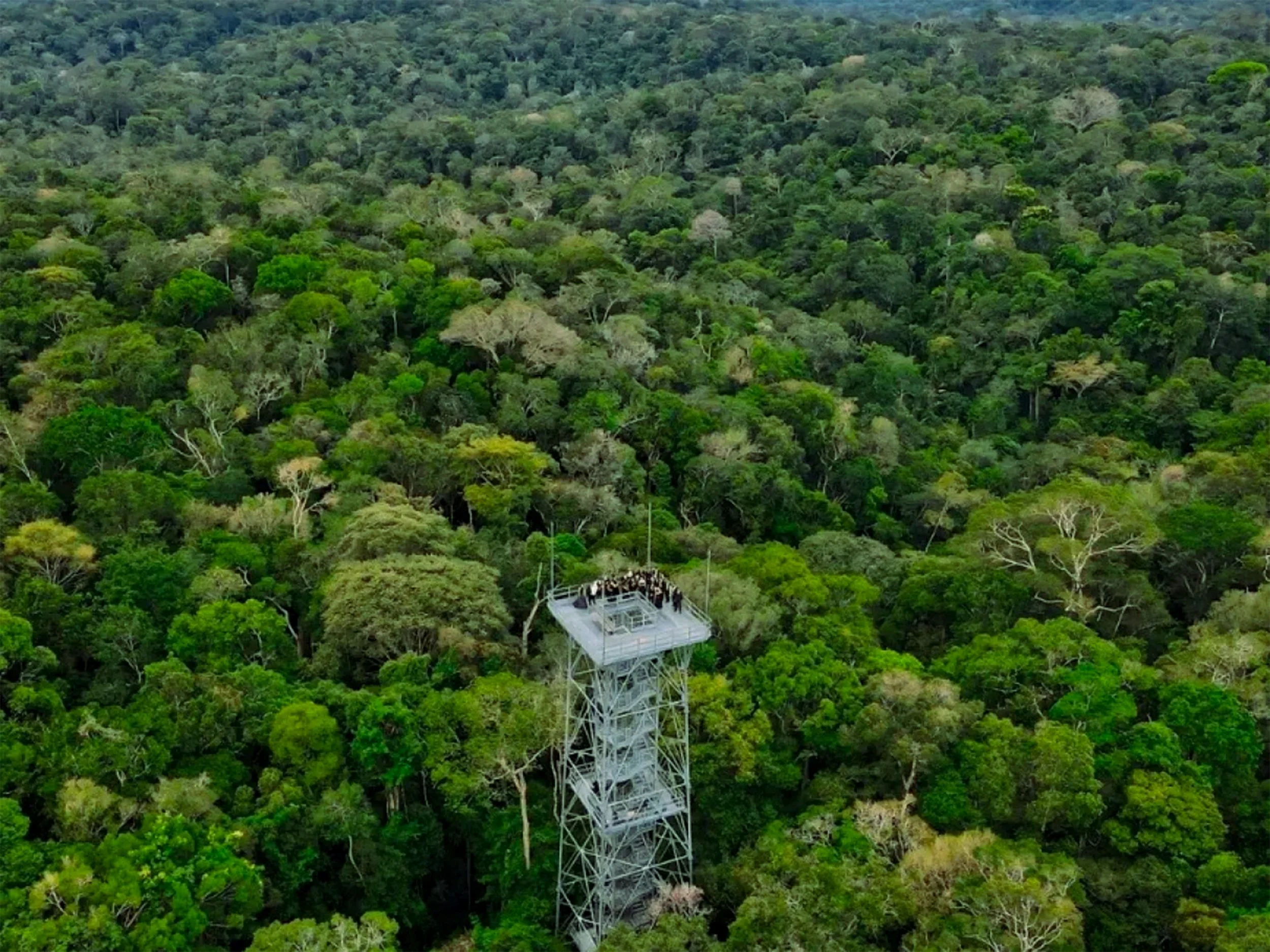
Tourists gathered on a 42 meter tall tower at MUSA, Manaus, Brazil.
The Museu da Amazônia (Musa) reminds us that a museum is not just limited to walls of artifacts but to a forest alive with stories, species, and ecosystems. Founded in 2009 inside the Adolpho Ducke Forest Reserve in Manaus, it is an open-air museum where the Amazon itself is the exhibit. With forest trails, botanical gardens, research labs, and a 42-meter observation tower, MUSA immerses visitors in the living, breathing ecosystem of the world’s largest rainforest—bridging science, Indigenous knowledge, and ecological wonder.
Address: Av. Margarita, 6305 (formerly Avenida Uirapuru), Cidade de Deus (Jorge Teixeira), Manaus, AM, Brazil, CEP 69088‑265
Hours: Open daily except Wednesday, 8:30 AM – 5 PM (last entry at 4 PM) Museu da Amazônia+1WhichMuseum+1
Admission: R$ 40; discounted or free entry for local residents, seniors, students, teachers, children under 5, persons with disabilities, and certain groups
MUSEO NACIONAL DE ANTROPOLOGÍA
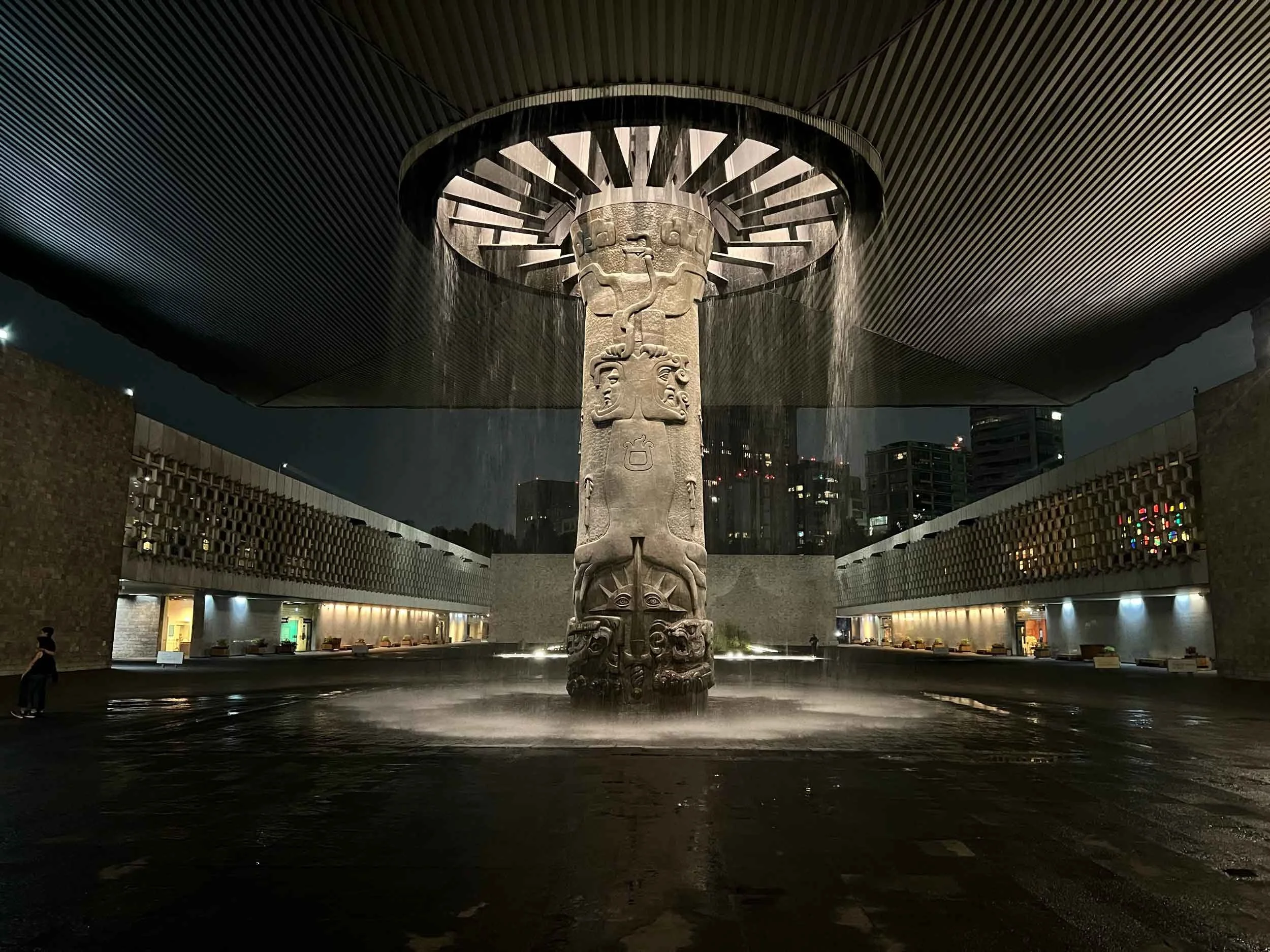
Limpieza del Paraguas monumental
Museo Nacional de Antropología is a monumental tribute to Mexico’s indigenous civilizations. From architecture to curation it honors the depth, diversity, and brilliance of the cultures that continue to shape Mexican identity today. This museum additionally serves as a leading museum of Indigenous and archaeological heritage in Latin America feauturing over 600,000 artifacts from civilizations like the Olmec, Maya, and Aztec. It houses 23 halls dedicated to Mexico’s diverse Indigenous cultures.
Address: Museo Nacional de Antropología, Av. Paseo de la Reforma & Calzada Gandhi S/N, Chapultepec, CDMX, Mexico
Hours: Tuesday–Sunday, 9:00 AM – 8:00 PM (Closed Mondays)
Admission: MX $100 (approx. US $6)
MUSEO DEL ORO
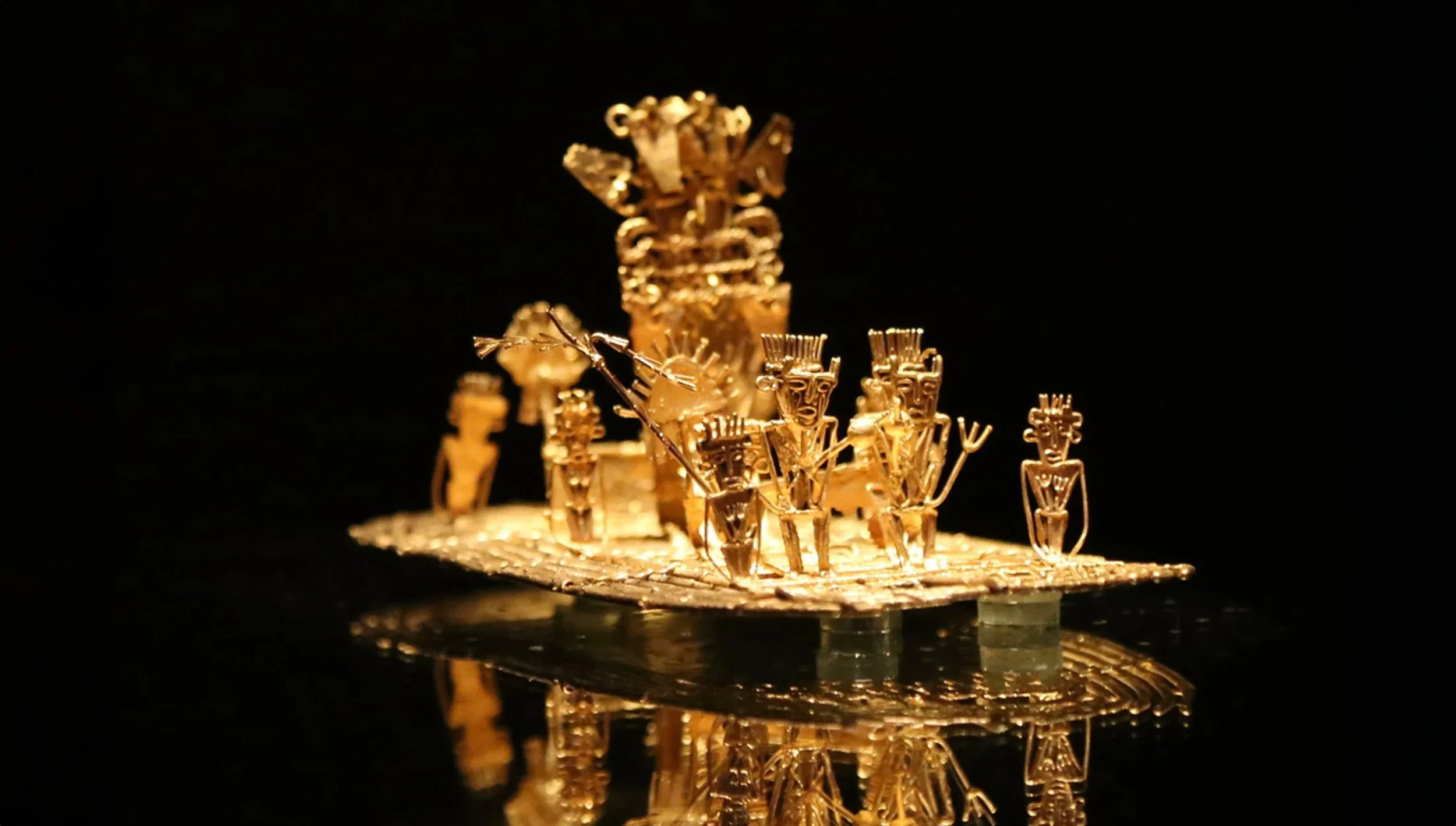
“The Golden Raft” a ceremonial scene believed to represent the initiation ritual of a new Muisca chief.
What if gold was never meant to be currency but a connection to the divine? Museo del Oro redefines gold not as a colonial plunder but as a sacred substance—offering a powerful counter-narrative to centuries of exploitation by centering Indigenous craftsmanship, mythology, and worldview. This museum holds the world’s largest collection of pre-Hispanic gold artifacts—over 34,000 pieces—crafted by Indigenous cultures such as the Muisca, Quimbaya, and Tairona.
Address: Carrera 6 # 15‑82 (Parque Santander), La Candelaria, Bogotá, Colombia
Hours: Open Tuesday to Saturday from 9 AM to 7 PM, Sundays and holidays from 10 AM to 5 PM; closed Mondays.
Admission: COP 5,000; free on Sundays and always free for children under 12, seniors, students, and select groups.
RAFAEL LARCO HERRERA MUSEUM
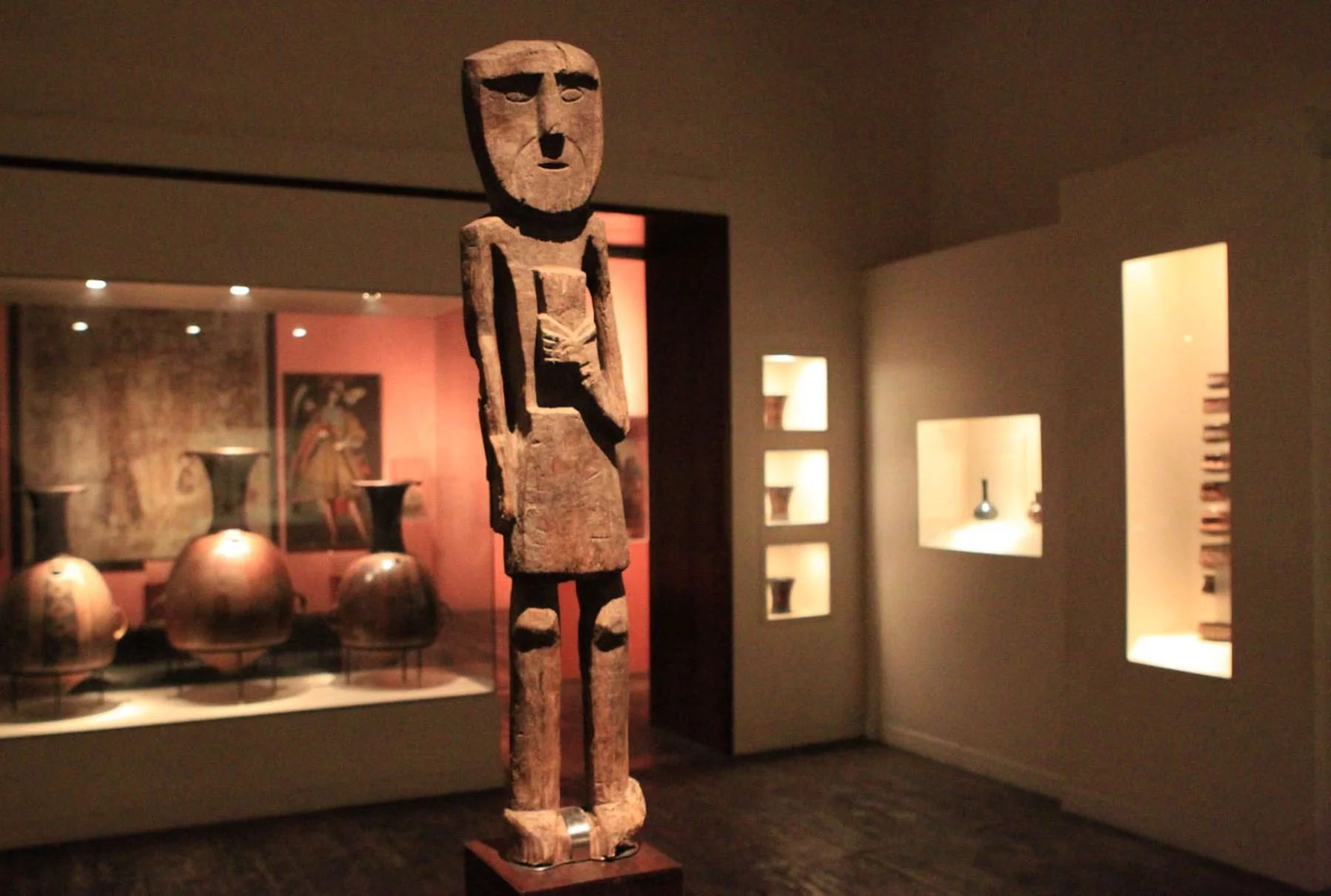
The Larco Museum holds the largest collection of pre-Columbian pieces in the Americas.
Set inside an 18th-century vice-regal mansion built atop a pre-Columbian pyramid, the Rafael Larco Herrera Museum holds one of the most extensive collections of ancient Peruvian art—spanning 5,000 years of history. Its open-storage galleries, richly preserved ceramics, and world-famous erotic pottery offer a uniquely intimate look into the lives, beliefs, and rituals of Peru’s ancestral civilizations.
Address: In Front of, Parque Larco, Av. Simón Bolivar 1515 Ingreso por, Navarra 169, Pueblo Libre 15084, Peru
Hours: Monday through Sunday from 9:00 AM to 7:00 PM, with reduced hours (9:00 AM–6:00 PM) on December 24, 25, 31, and January 1.
Admission: S/ 35 general, S/ 17 for students and seniors (with ID); free for children under 8.
MUSEO DE ARTE PRECOLOMBIANO E INDIGENA (MAPI)
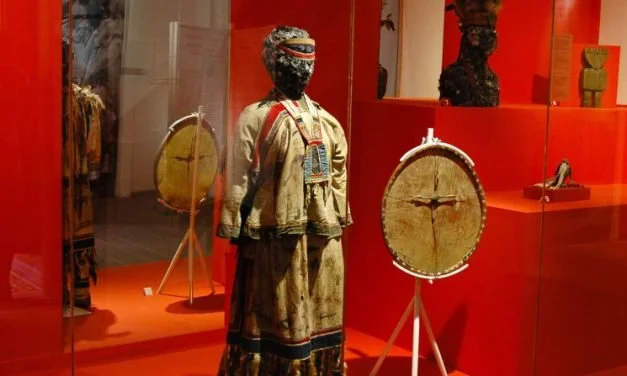
Bridging past and present, the Museo de Arte Precolombino e Indígena (MAPI) honors the region’s pre-Columbian heritage while amplifying the voices of contemporary Indigenous artists and perspectives. MAPI stands out for its commitment to education, cultural continuity, and inclusive storytelling in the Southern Cone.
Address: 25 de Mayo 279, 11000 Montevideo, Departamento de Montevideo, Uruguay
Hours: Monday through Saturday 10:30AM to 6 PM, Closed on Sundays
Admission: 200 Uruguayan Pesos, with student discounts available and free entry for children (under 12), retirees, and select cardholders on Monday AM.
POPOL VUH MUSEUM
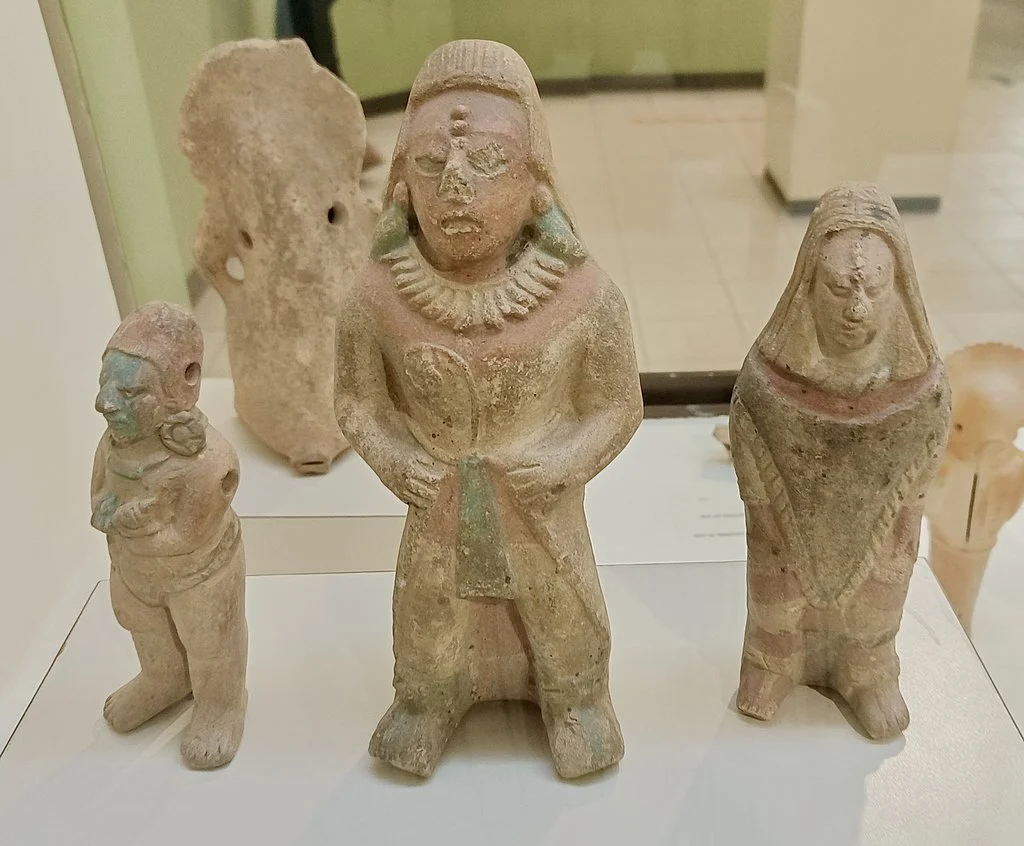
Named after one of the most important and sacred texts of the K’iche’ Maya people of Guatemala, the Museo Popol Vuh, located at Universidad Francisco Marroquín in Guatemala City, is home to one of the most significant collections of Maya art in the world. It offers visitors an in-depth look at the spiritual, artistic, and everyday lives of ancient Maya civilizations through finely preserved ceramics, sculptures, and funerary masks—while also fostering academic research and cultural education.
Address: Interior Universidad Francisco Marroquín, Diag. 6 Final, Ciudad de Guatemala 01010, Guatemala
Hours: Monday through Friday 9AM to 5PM, Saturday 9AM to 1PM, Sundays are closed
Admission: 45 Quetzales for adults, 15 Quetzales for students, and 10 Quetzales for children
CASA DEL ALABADO
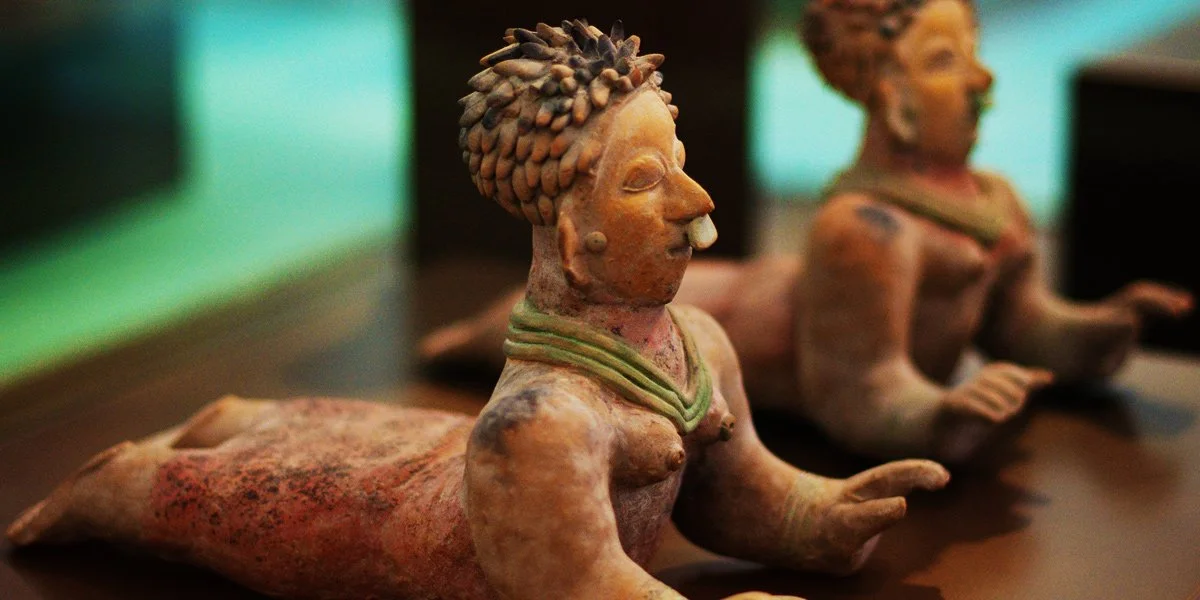
Figurines from one of the oldest known settled communities in the Americas, the Valdivia of coastal Ecuador.
Casa del Alabado is designed to decolonize the museum experience, centering Indigenous cosmology over Western timelines. Housed in a beautifully restored 17th-century home in Quito’s historic center, it features over 5,000 pre-Columbian pieces—about 500 of which are on display at any given time. Rather than organizing artifacts by empire or chronology, the museum invites visitors to connect with ancestral themes like the cosmos, ritual, nature, and memory. It transforms archaeological objects into vessels of myth and meaning.
Address: Cuenca N1-41, Quito 170401, Ecuador
Hours: Wednesday through Sunday 9:00 AM to 5:00 PM, Monday and Tuesday open for private appointments only.
Admission: Adults (general rate) 10 USD, Students (with valid ID) 5 USD, Children under 8 are admitted for free.
National Museum of the American Indian
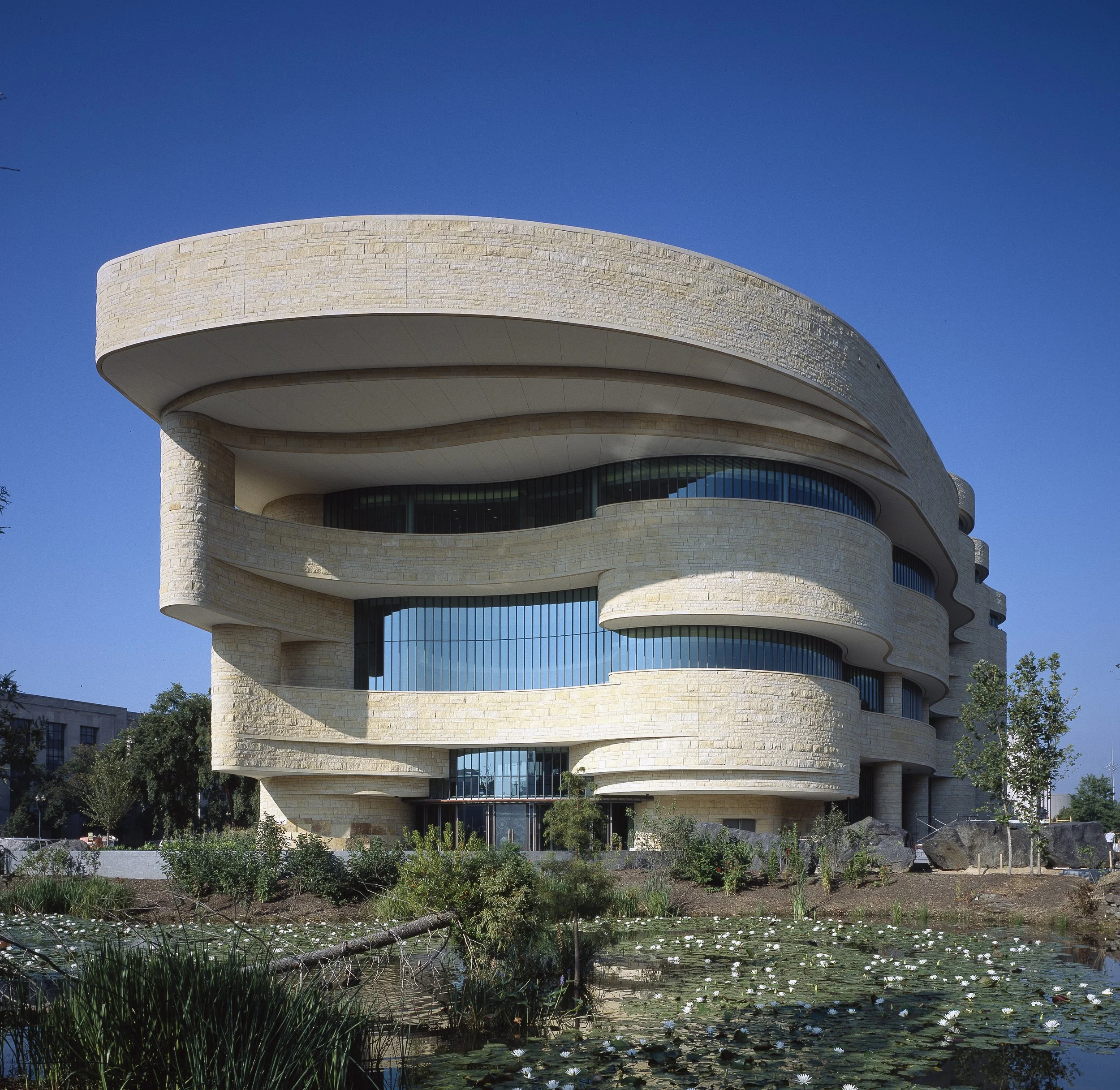
The National Museum of the American Indian in Washington, D.C., part of the Smithsonian Institution, holds one of the world’s most extensive collections of Indigenous artifacts, photographs, and media from across the Americas—spanning the Arctic to Tierra del Fuego—and presents all exhibitions from Native perspectives in collaboration with tribal communities
Address: Fourth Street and Independence Ave SW, Washington, DC 20560
Hours: Daily from 10:00 AM until 5:30PM, closed for Christmas Day, December 25th.
Admission: FREE
MUSEUM OF ANTHROPOLOGY AT UBC
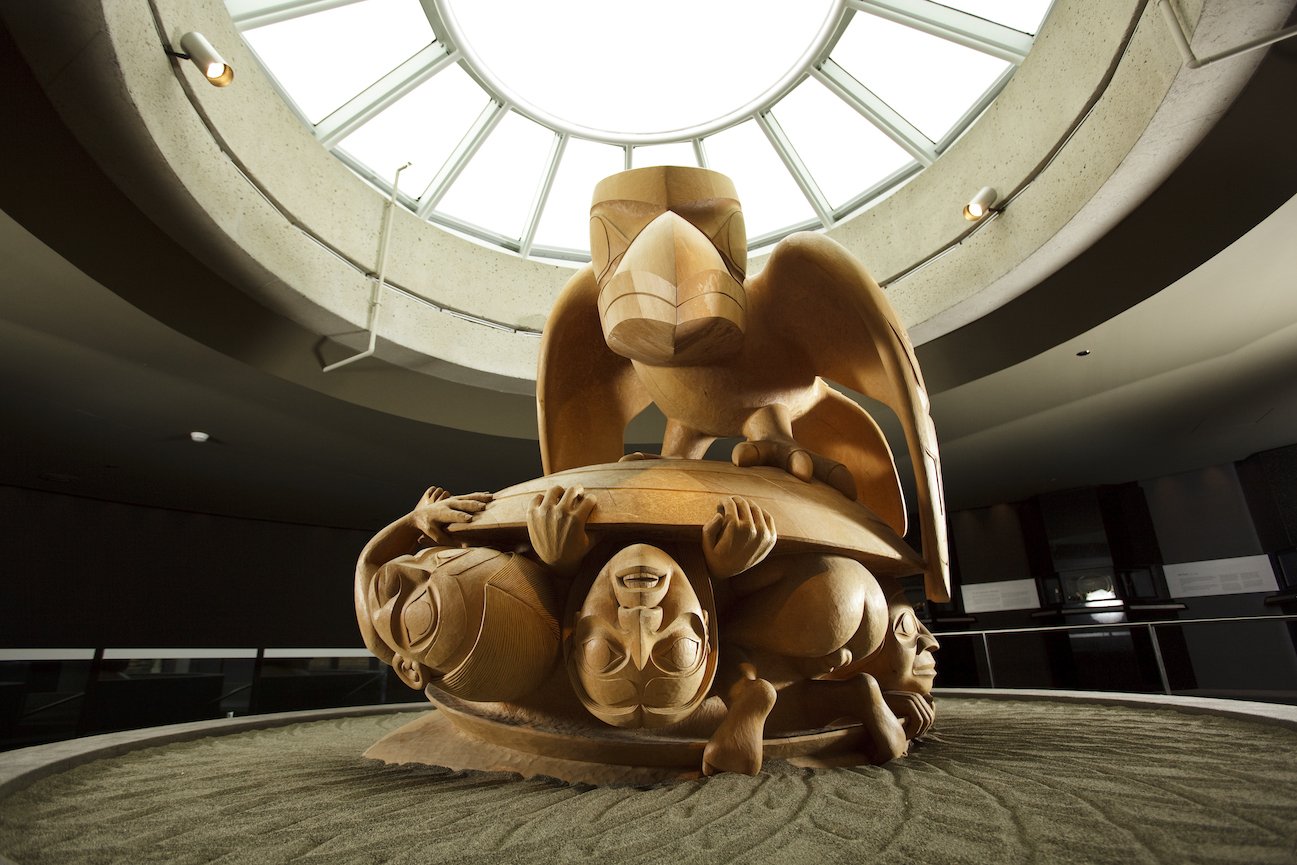
The Museum of Anthropology at UBC (MOA) in Vancouver, Canada, is a renowned research and teaching museum showcasing nearly 50,000 ethnographic and over 535,000 archaeological objects, with a special emphasis on First Nations art of the Pacific Northwest, including monumental totem poles and Bill Reid’s iconic cedar sculpture The Raven and the First Men (shown here).
Address: 6393 NW Marine Drive, Vancouver, BC V6T 1Z2, Canada
Hours: Everyday from 10:00AM to 5:00PM with the exception of Thursdays where they remain open until 9:00PM
Admission: $18 for Adults and free admission for children 6 and under
MUSEU PARAENSE EMILIO GOELDI
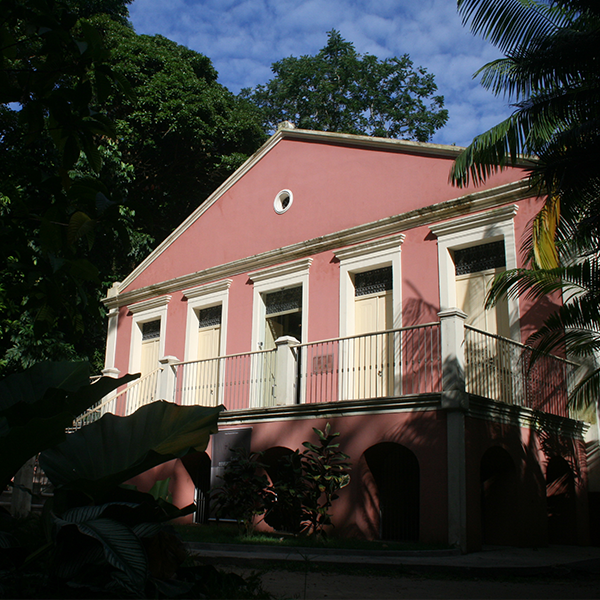
Founded in 1866, the Museu Paraense Emilio Goeldi is Brazil’s oldest research center dedicated to the Amazon’s natural and cultural heritage with a strong emphasis on the indigenous peoples of the region. The museum offers and open air botanical and zoological park that blends ecological and cultural storytelling.
Address: Av. Gov Magalhães Barata, 376 - São Braz, Belém - PA, 66040-170, Brazil
Hours: Wednesday through Sunday 9AM to 1PM, Closed on Mondays and Tuesdays
Admission: R$ 3.00, free entry for children under 12 and seniors 60+
